Categories more
- Adventures (220)
- Arts / Collectibles (400)
- Automotive (980)
- Aviation (402)
- Bath, Body & Health (6828)
- Children (139)
- Cigars / Spirits (297)
- Cuisine (741)
- Design / Architecture (1129)
- Electronics (255)
- Entertainment (278)
- Event Planning (435)
- Fashion (1255)
- Finance (461)
- Gifts / Misc (166)
- Home Decor (685)
- Jewelry (1039)
- Pets (148)
- Philanthropy (124)
- Real Estate (450)
- Services (226)
- Sports / Golf (321)
- Vacation / Travel (1435)
- Watches / Pens (411)
- Wines / Vines (879)
- Yachting / Boating (9133)




Effective Residential and Commercial Pest Control Strategies

Published
11/18/2026Identifying Indoor Zygentoma: Silverfish, Firebrats, and Property Risks
When we talk about silverfish, we're actually referring to a group of primitive, wingless insects belonging to the order Zygentoma. These fascinating creatures are among the oldest insect groups, having existed for millions of years. Their name, "silverfish," comes from their silvery-blue color and the fish-like wiggling motion they make when they move. While the common silverfish ( Lepisma saccharina) is the most well-known, we often encounter other closely related species like firebrats and long-tailed silverfish, each with distinct preferences and characteristics.
Understanding the differences between these common household pests is crucial for effective control. Here's a comparative overview:
Feature Common Silverfish (Lepisma saccharina) Firebrats (Thermobia domestica) Long-tailed Silverfish (Ctenolepisma longicaudata) Appearance Silvery-blue, 12-19 mm (½-¾ inch) long, teardrop-shaped, three long bristles at tail, often with a metallic sheen. Mottled gray-brown, slightly shorter (up to 12 mm), more robust, also with three tail-like appendages. Grayish, larger (up to 25 mm), with very long antennae and tail filaments, often appearing dusty. Temperature Preference Moderate to warm (71°F-90°F / 22°C-32°C) Very warm to hot (90°F-102°F / 32°C-39°C), thrives near heat sources. Tolerant of a wider range, including drier and cooler conditions than common silverfish. Humidity Preference High (75%-95% relative humidity) Low (as low as 30% relative humidity), prefers dry heat. Less dependent on high humidity, can thrive in both damp and relatively dry environments. Lifespan Up to 3 years (can live 2-8 years in optimal conditions) About 2 years Up to 5 years Egg Hatch Time 2 weeks to 2 months (typically 19-32 days) About 2 weeks (typically 14 days) 2 to 8 weeks Adult Development ~60 days at >75°F; ~500 days at <50°F ~40 days at >75°F; ~300 days at <50°F 3 to 24 months depending on conditions Eggs Laid Fewer than 100 in a lifetime, in groups of <60 Thousands in a lifetime, up to 50 at once Up to 100 in a lifetime Table: Comparison of Common Silverfish, Firebrats, and Long-tailed Silverfish Characteristics
Silverfish are remarkable for their longevity and unique life cycle. They can live for a year or more without eating if water is available, showcasing incredible resilience. Their lifespan typically ranges from 2 to 8 years, with common silverfish often living around 3 years. One of their most unusual traits is that they continue to molt throughout their entire lives, even after reaching adulthood. A single silverfish can undergo anywhere from 17 to an astonishing 66 molts, sometimes as many as 30 in a single year. This continuous molting means they shed their exoskeletons frequently, leaving behind tiny, silvery scales that can be a tell-tale sign of their presence.
Being nocturnal creatures, silverfish are masters of stealth. They prefer to operate under the cover of darkness, scurrying away rapidly when exposed to light. This elusive behavior often means that an infestation can go unnoticed until it becomes quite significant, or until we stumble upon the damage they leave behind.
Structural Attractants and Material Damage
Silverfish are primarily attracted to homes by two main factors: food sources and environmental conditions. They are voracious eaters of carbohydrates, particularly starches, sugars, and cellulose. This broad diet means many common household items are on their menu. We often find them feasting on:
- Paper products: Books, magazines, newspapers, cardboard boxes, important documents, and even wallpaper. They consume the paper itself and the starch-based adhesives used in bindings and wallpaper sizing.
- Fabrics: Cotton, linen, rayon, and other natural fibers, especially those starched or soiled.
- Food items: Flour, oats, cereals, pasta, dried meats, pet food, and sugar.
- Other materials: Glue, shampoo, certain glues, and even dead insects and household dust can sustain them.
The damage caused by silverfish can be significant and costly. We might notice irregular holes, notches, or etchings on paper items, sometimes accompanied by yellow stains or tiny, pepper-like fecal pellets. For instance, a vintage book collection stored in a damp basement could suffer irreparable harm to its bindings and pages. Similarly, valuable documents or cherished photographs can be defaced, losing their integrity and historical value.
While silverfish are not directly harmful to humans or pets in terms of biting or transmitting diseases, they do pose other health and safety concerns. Their shed scales and droppings contain proteins that can become airborne and act as allergens, potentially triggering respiratory symptoms in sensitive individuals, similar to dust mites. This makes them a nuisance pest that can impact indoor air quality. For our pets, silverfish are not poisonous, so accidental ingestion is generally not a cause for concern, though we certainly don't want them in our pet food. The primary harm silverfish inflict is property damage and the contamination of food and personal items.
Core Principles of Residential Pest Control
Effective silverfish control in our homes hinges on a multi-faceted approach, focusing on environmental modification, sanitation, and exclusion. The foundational principle is to make our living spaces inhospitable to these moisture-loving pests.
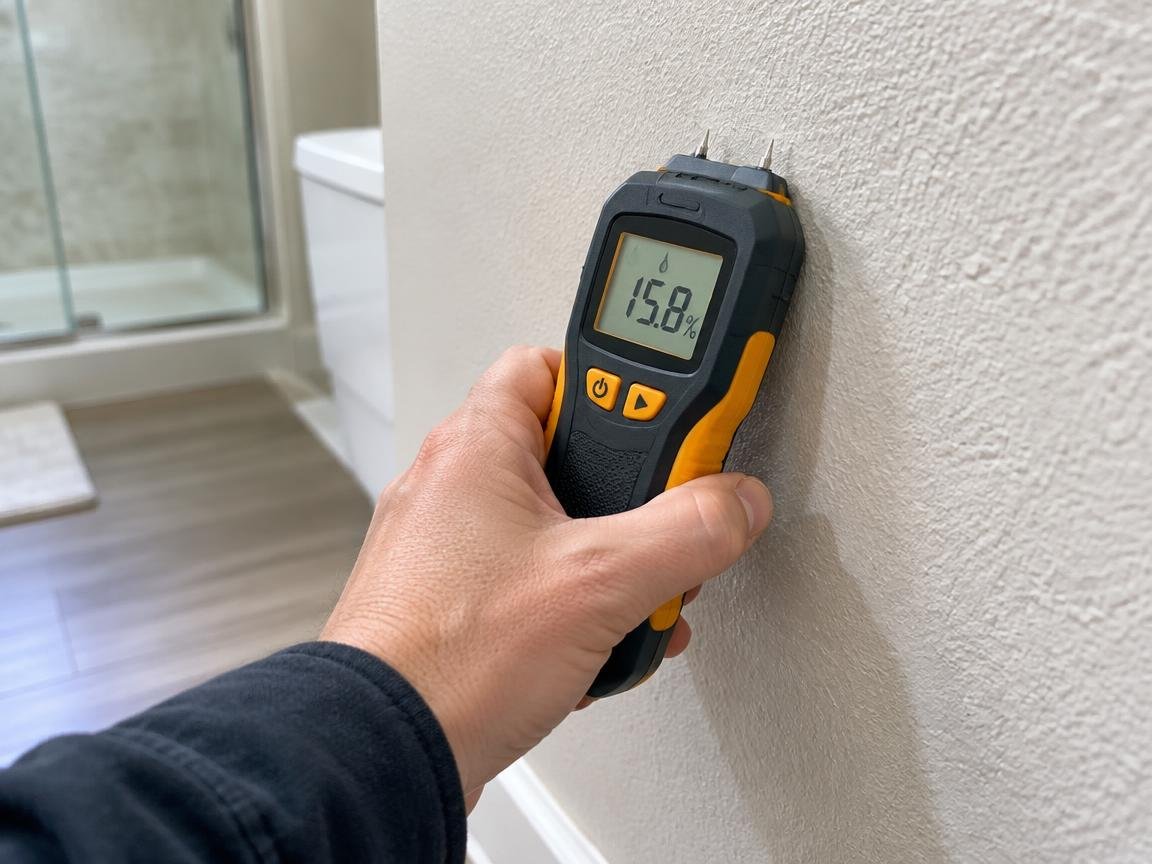
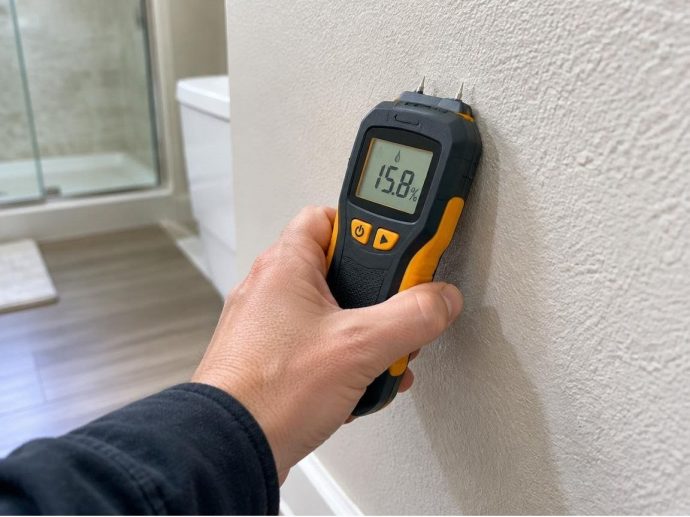
One of the most critical factors we must address is relative humidity (RH). Silverfish require a relative humidity between 75% and 95% to survive and thrive. By reducing indoor humidity to below 75%, and ideally aiming for 30-50% or at least below 60%, we can significantly deter silverfish. This can be achieved through various means, including:
- Fixing leaks: Promptly repairing leaky pipes, faucets, roofs, and foundations eliminates crucial water sources.
- Improving ventilation: Ensuring adequate airflow in bathrooms, kitchens, basements, and attics helps to dissipate moisture. Exhaust fans should be used during and after showering or cooking.
- Environmental sanitation: Regular cleaning is essential. This involves vacuuming thoroughly to remove food debris, dust, and shed scales, which can be food sources. Keeping areas tidy and free of clutter also removes hiding spots.
- Entry sealing and crack caulking: Silverfish can enter our homes through tiny cracks and crevices. Sealing these entry points around baseboards, windows, doors, and utility penetrations (pipes, wires) with caulk or other appropriate sealants can prevent them from getting in and limit their movement once inside.
These proactive measures form the backbone of any successful silverfish control strategy, creating an environment where they simply cannot flourish.
Non-Chemical Tactics in Residential Pest Control
Once we've addressed the underlying environmental factors, we can implement several non-chemical methods to further reduce silverfish populations and monitor their activity.
Dehumidifier operation is perhaps the most impactful non-chemical tactic. Placing dehumidifiers in high-humidity areas like basements, bathrooms, and attics can drastically lower the relative humidity, making these spaces unsuitable for silverfish. Consistent operation is key, as silverfish can survive for extended periods without food if water is readily available.
Sticky glueboards are excellent for monitoring silverfish activity and can also trap a significant number of individuals. We can place these discreetly along baseboards, in corners, inside cabinets, and near suspected entry points. Regularly checking these traps helps us identify hotspots and track the effectiveness of our control efforts.
Another simple yet effective trap is the taped-jar trap. To create one, we take a glass jar (like a mason jar), wrap the outside with masking tape to provide a rough surface for silverfish to climb, and place a starchy food item (like a piece of bread or a cracker) inside. Silverfish can climb into the jar but cannot climb out of the slick glass interior. These traps are great for localized control and monitoring.
Structural decluttering is a powerful preventive measure. Silverfish love to hide in undisturbed, dark places, especially amidst paper and cardboard. Removing piles of old newspapers, magazines, books, and cardboard boxes from basements, attics, and closets eliminates both hiding spots and food sources. For items we wish to keep, storing them in airtight plastic containers rather than cardboard boxes can protect them from silverfish damage.
Finally, food containment is vital. We should store all dry goods, including flour, sugar, cereals, and pet food, in sealed, airtight containers. This cuts off a primary food source and prevents silverfish from contaminating our pantry items.
Targeted Treatments and Insecticide Dusts for Residential Pest Control
When environmental controls and non-chemical traps aren't quite enough, or for more persistent infestations, we can turn to targeted treatments using certain dusts and natural repellents. These should always be applied after addressing moisture issues, as dry conditions are essential for their efficacy.
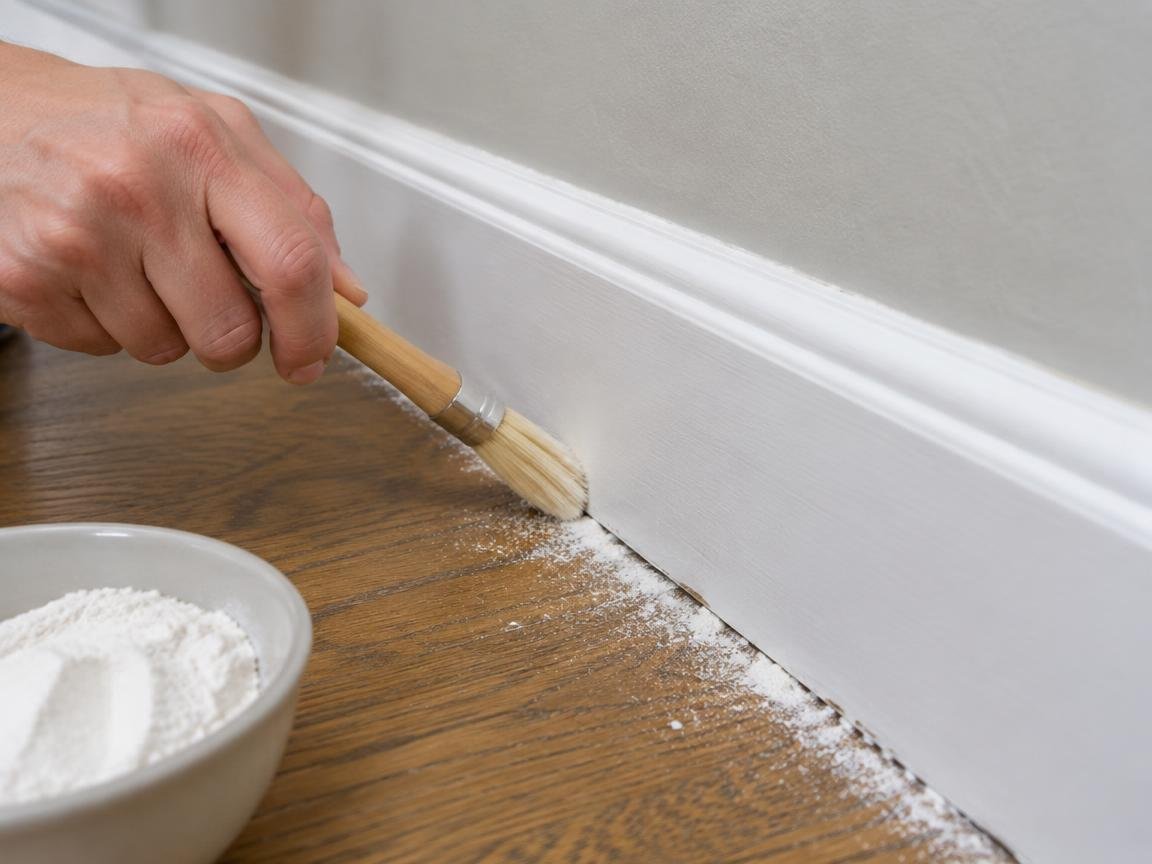
Diatomaceous earth (DE) is a natural, non-toxic powder made from the fossilized remains of diatoms. It works by absorbing the waxy outer layer of insects, causing them to dehydrate and die. We can apply a very thin layer of food-grade DE into cracks and crevices, along baseboards, behind appliances, and in other hidden areas where silverfish are active. It's crucial to apply it as a fine, barely visible dust, as thick piles will be avoided by pests. DE remains effective indefinitely as long as it stays dry.
Similarly, boric acid powder can be used in hidden areas. Boric acid acts as a stomach poison and abrasive dust, damaging the silverfish's exoskeleton. Like DE, it must be applied thinly and kept dry to be effective. Both DE and boric acid should be used with caution around children and pets, ensuring they are applied in inaccessible areas.
Silica gel, another desiccant dust, works similarly to diatomaceous earth by absorbing moisture from the insect's body, leading to dehydration. It can be particularly effective in very dry environments.
For a more natural approach, Japanese cedar essential oil has shown remarkable efficacy against silverfish. Research indicates that an exposure of 0.16 mg/cm³ of Japanese cedar essential oil for 10 hours caused a 100% mortality rate in silverfish. Even at lower concentrations, filter paper impregnated with Japanese cedar essential oil repelled 80% of silverfish at a gas concentration of 0.01 mg/cm³. We can place drops of this essential oil on cotton balls or use diffusers in affected areas, particularly near vulnerable items like books or clothing, to repel them. However, it's important to note that while cedar oil can be a repellent, traditional cedar blocks or shavings are generally not effective for silverfish control, contrary to popular belief.
When using any dusts, we must always follow the product label instructions carefully for safe and effective application. These targeted treatments can significantly reduce silverfish populations, especially when combined with diligent moisture control and sanitation practices.
Managing Complex Infestations in Multi-Unit and Commercial Facilities
Dealing with silverfish in multi-unit residential buildings, such as apartment complexes, or commercial facilities like libraries, museums, or office buildings, presents unique challenges compared to single-family homes. The interconnected nature of these structures means that an infestation in one area can quickly spread to others, making localized treatments less effective.
In one striking example, researchers in a Norwegian apartment complex found an established population of long-tailed silverfish had already spread into 49 of 57 units, or 86 percent of the building, before treatment began. This highlights how rapidly these pests can colonize and disseminate throughout larger structures. Their ability to find harborage in wall voids, utility chases, and shared spaces means that a comprehensive, coordinated approach is essential.
For such widespread or persistent issues, especially in environments where sensitive materials (like historical documents in archives) or public health (in commercial settings) are at stake, relying solely on DIY methods is often insufficient. This is when we recommend engaging professional expertise. Professional commercial pest control services possess the knowledge, specialized equipment, and access to more potent and targeted treatments required to effectively manage large-scale silverfish infestations. They can conduct thorough inspections to identify all harborage areas, implement integrated pest management (IPM) strategies tailored to the specific facility, and ensure compliance with any relevant health and safety regulations. Their expertise is invaluable for archival preservation and protecting valuable inventory from damage.

Systematic Baiting Protocols and Trap Logging
In commercial and multi-unit settings, systematic baiting protocols are often a cornerstone of professional silverfish control. Unlike some pests, silverfish can survive for several months without nourishment, which can make baiting challenging due to food competition. However, when applied correctly, baits can be highly effective.
Research has shown that the placement and density of bait can significantly impact its efficacy. For instance, bait efficacy increased roughly fourfold when droplets were spaced evenly and widely throughout an infested area, compared to sparse or clustered placement. This widespread distribution ensures that silverfish, which forage widely, are more likely to encounter the bait.
A building-wide bait strategy, as demonstrated in the Norwegian apartment complex study, successfully cleared the 86-percent-infested building in under 28 weeks. In contrast, a detached house initially treated with sparse bait stations took an additional 25 to 40 weeks to clear after switching to a widespread-droplet protocol. This underscores the importance of a systematic and thorough approach, particularly in larger or more complex structures.
Trap logging is another critical component of systematic pest management. By consistently placing sticky traps in strategic locations and meticulously recording the number of silverfish caught, along with the date and location, we can effectively track population trends. This data helps us:
- Identify persistent hotspots.
- Assess the effectiveness of treatments over time.
- Determine if silverfish are migrating from untreated areas.
- Confirm when an infestation has been successfully suppressed.
This methodical approach, combining strategic baiting with rigorous monitoring, is essential for achieving long-term control and preventing recurrence in challenging environments.
Frequently Asked Questions About Structural Pest Management
Are silverfish harmful to humans or household pets?
We often receive questions about the potential harm silverfish pose. The good news is that silverfish are not considered dangerous to humans or household pets. They are non-venomous and do not bite. Unlike some other pests, they are not known to transmit diseases.
However, they are not entirely harmless. Their presence can be problematic due to:
- Respiratory allergens: As we've discussed, their shed scales and droppings can become airborne and trigger allergic reactions or respiratory symptoms in sensitive individuals.
- Property damage: This is their primary mode of harm. They can cause significant and irreversible damage to books, documents, photographs, wallpaper, clothing, and stored food items.
- Pet safety: While silverfish are not poisonous to pets, we certainly don't want them contaminating pet food. If a pet were to ingest a silverfish, it would typically be harmless.
So, while they won't hurt us directly, their destructive habits and potential to cause allergies make them undesirable houseguests that require our attention.
How can property owners verify that pest treatments are working?
Knowing whether our silverfish control efforts are effective is crucial for long-term success. The most reliable method for verification is consistent monitoring with sticky traps.
- Declining captures: We should place sticky traps in areas where silverfish activity has been observed (e.g., basements, bathrooms, pantries). By checking these traps regularly (e.g., weekly) and recording the number of silverfish caught, we can track population trends. A steady decline in the number of captured insects is a strong indicator that our treatments are working.
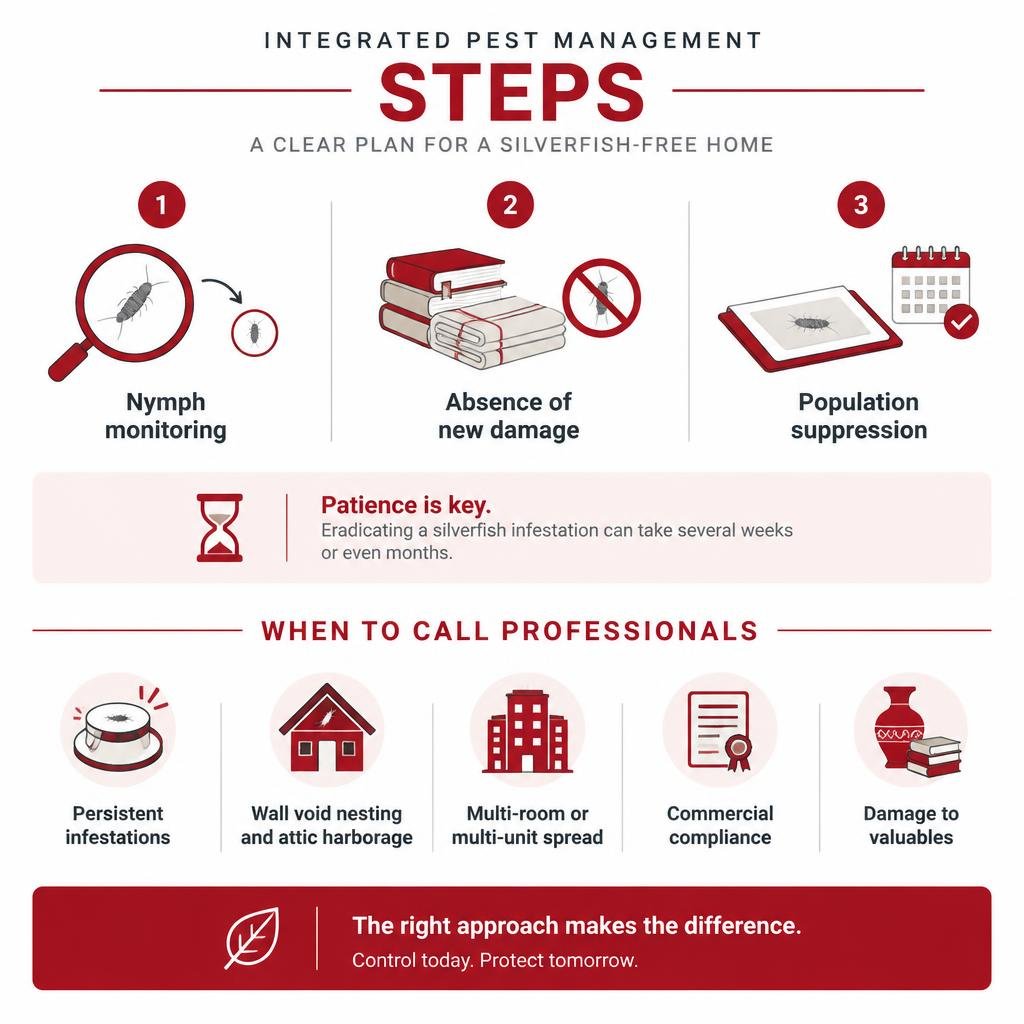
- Nymph monitoring: Silverfish eggs take between two weeks and two months to hatch. Even if adult numbers decrease, we might still see newly hatched nymphs for some time. Continued captures of nymphs indicate that eggs are still present and hatching, signaling the need for ongoing treatment until the entire life cycle is disrupted.
- Absence of new damage: Another sign of success is the cessation of new damage to vulnerable items like books or fabrics.
- Population suppression: The ultimate goal is to suppress the population to undetectable levels. If traps remain empty for several consecutive weeks, it's a good sign that the infestation is under control.
Patience is key, as fully eradicating a silverfish infestation can take several weeks or even months, especially given their long egg incubation periods and ability to survive without food.
When is it necessary to engage professional extermination services?
While many DIY methods can be effective for small, localized silverfish problems, there are specific scenarios where calling a professional pest control service becomes essential:
- Persistent infestations: If, after several weeks of consistent DIY efforts (moisture control, sanitation, trapping, dust applications), we are still catching silverfish in our traps or observing new damage, it's a clear sign that the infestation is beyond our ability to manage alone.
- Wall void nesting and attic harborage: Silverfish often hide and breed in inaccessible areas like wall voids, attics, and crawl spaces. These areas require specialized equipment and products that are typically only available to licensed professionals. If we suspect the infestation originates from such hidden harborage points, professional help is warranted.
- Multi-room or multi-unit spread: When silverfish are found in multiple rooms, across different floors, or in adjacent units of an apartment building, it indicates a widespread problem that requires a coordinated, comprehensive approach that professionals are equipped to provide.
- Commercial compliance: For businesses, libraries, museums, or any commercial property, managing pests is not just about protection but also about maintaining compliance with health, safety, and preservation standards. Professionals can ensure effective treatment while adhering to regulations and minimizing disruption to operations.
- Damage to valuables: If we have particularly valuable items (e.g., antique books, important documents, historical artifacts) at risk, the stakes are higher. Professionals can offer more robust and targeted solutions to protect these assets.
Professionals have access to more potent and specialized insecticides (like targeted sprays or baits) and the expertise to apply them safely and effectively. They can also implement an integrated pest management (IPM) plan that addresses the root causes of the infestation, providing a more sustainable, long-term solution.
Conclusion
Controlling silverfish effectively requires a strategic and persistent approach. We've learned that these ancient, moisture-loving insects are primarily attracted to our homes by high humidity and readily available starchy food sources, posing a threat to our property through damage and potential allergens.
The cornerstone of any successful silverfish management strategy is an integrated pest management (IPM) approach. This begins with creating an environment hostile to silverfish through continuous dehumidification and improving ventilation to keep relative humidity below 60%. Simultaneously, diligent structural maintenance, including sealing cracks and crevices and repairing leaks, prevents entry and limits harborage.
Beyond environmental controls, we must commit to rigorous sanitation, decluttering, and storing food in airtight containers to eliminate their food sources. For active infestations, non-chemical tactics like sticky traps and taped-jar traps provide monitoring and localized control, while targeted applications of desiccant dusts like diatomaceous earth or boric acid can effectively reduce populations.
For complex, widespread, or persistent infestations, particularly in multi-unit residential or commercial settings, the expertise of professional pest control services becomes invaluable. They can implement systematic baiting protocols and comprehensive treatment plans that are difficult for individuals to achieve alone.
Regular monitoring with sticky traps is our best tool for assessing the effectiveness of our efforts and ensuring that silverfish populations remain suppressed. By consistently applying these integrated strategies, we can keep our homes and businesses silverfish-free and protect our valuable belongings. Implement these steps today to keep your home silverfish-free and protect your belongings.

Comments