Categories more
- Adventures (105)
- Arts / Collectables (29)
- Automotive (88)
- Aviation (88)
- Bath, Body, & Health (183)
- Children (62)
- Cigars / Spirits (116)
- Cuisine (160)
- Design/Architecture (74)
- Electronics (93)
- Entertainment (54)
- Event Planning (134)
- Fashion (173)
- Finance (19)
- Gifts / Misc (49)
- Home Decor (179)
- Jewelry (133)
- Pets (33)
- Philanthropy (6)
- Real Estate (110)
- Services (68)
- Sports / Golf (56)
- Vacation / Travel (375)
- Watches / Pens (98)
- Wines / Vines (75)
- Yachting / Boating (119)



Electric Dirt Bike Specifications Explained From Watts to Watt Hours

Published
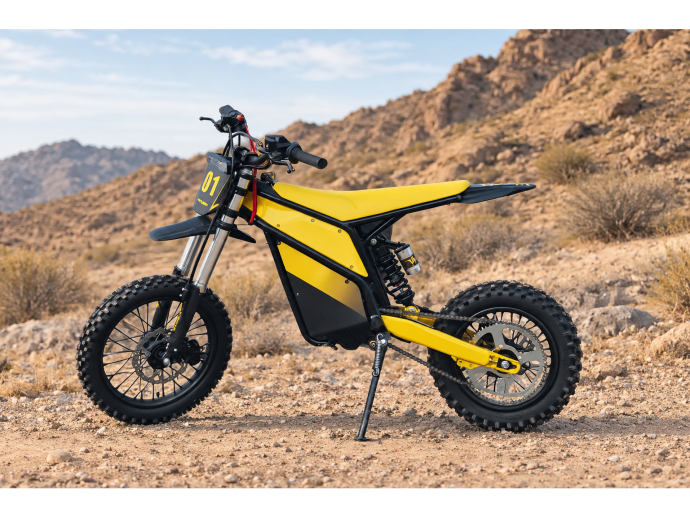
10/14/2026Open several electric dirt bike product pages and the numbers can look deceptively simple. One lists a large peak power figure, another emphasizes battery voltage, and a third leads with torque. Put those figures side by side without understanding the units and it is easy to compare things that answer completely different questions.
The most useful distinction is between how quickly energy can be delivered and how much energy is stored. Motor and battery specifications then become easier to interpret. They still do not describe the whole riding experience, but they give buyers a better foundation for asking the right questions.
Watts describe power
A watt is a unit of power, or the rate at which energy is transferred. A kilowatt equals one thousand watts. Power can be quoted at different points in a vehicle system, so the measurement location matters. Electrical input to the motor is not automatically the same as mechanical output delivered by it.
Losses occur as energy passes through the controller, motor, and drivetrain. Without a clear measurement method, two advertised figures may not be directly comparable. Look for definitions rather than assuming that every number labeled motor power comes from an identical test.
Power also changes during a ride. Moving gently along level ground and accelerating uphill demand different output. The maximum listed figure does not describe the power the bike uses continuously throughout an ordinary session.
Peak and continuous ratings answer different questions
Peak power generally describes output available under specified conditions for a limited period. Continuous or rated output concerns a different operating condition, often tied to thermal limits and a defined rating method. Manufacturers do not always present those methods identically.
A high peak number can be relevant to acceleration, but it does not establish what the machine can sustain during a long climb. The duration, temperature, battery state, and protection settings matter. Ask whether the quoted peak is electrical input or mechanical output and how the continuous rating is defined.
Avoid comparing one bike's peak figure with another bike's nominal figure as though they were the same specification. Both may be accurate while creating a misleading comparison. A small table that labels the rating type can reveal more than ranking models by the largest number.
Voltage and amp hours need each other
Voltage describes electrical potential difference. Amp hours describe electrical charge capacity. Neither figure alone gives a complete battery-energy comparison. A higher-voltage battery is not necessarily a battery that stores more energy than every lower-voltage alternative.
Multiplying nominal volts by amp hours gives an approximate nominal energy figure in watt hours. For example, a hypothetical 60-volt, 30-amp-hour battery would be described as approximately 1,800 watt hours. This is a calculation example, not a specification for a particular bike.
Actual usable energy can differ from the nominal figure because of operating limits, conditions, and the battery management system. It is still useful to compare watt hours when interpreting capacity, provided the figures use a consistent basis.
Torque needs a measurement location
Torque describes a turning effect and is often expressed in newton meters. Motor torque and rear-wheel torque are not interchangeable. A reduction drive can increase torque at the wheel while reducing rotational speed, which is why measurement location matters so much.
When researching the V1 through Heybike Sports, keep the original labels attached to each specification. Recording a number without its unit or rating type strips away the context needed for an honest comparison. Current official information is a better reference than a copied table with incomplete headings.
Wheel size also influences the relationship between wheel torque and force at the ground. Even then, available traction limits what can be used. A large torque figure cannot guarantee acceleration on loose soil, and it does not establish a safe or repeatable climbing angle.
Battery energy does not convert directly into distance
Watt hours quantify energy, while range describes an outcome. Speed, elevation change, surface resistance, rider load, temperature, and riding style determine how quickly that energy is consumed. Two riders using the same pack can therefore travel different distances.
Anyone comparing an electric dirt bike should keep capacity and advertised range in separate columns. Capacity helps explain the energy available. Range needs the test conditions to become meaningful. Neither figure should be treated as a promise for every off-road route.
Charging time is another separate measurement. It depends on the approved charger, starting charge level, and battery conditions. A larger pack does not automatically require a longer charge than every smaller pack, because the charging arrangements may differ.
Build a comparison that preserves the meaning
Write down power with its rating type, battery energy with its basis, and torque with its measurement location. Add weight, dimensions, intended use, and support availability alongside the electrical figures. Those details explain whether a machine suits the rider, not merely whether its numbers are impressive.
Missing definitions are questions to resolve, not blanks to fill with assumptions. Once the units are clear, a specification sheet becomes a useful description of the machine. It remains the beginning of an assessment rather than the entire decision.
Comments
