Categories more
- Adventures (199)
- Arts / Collectibles (315)
- Automotive (219)
- Aviation (279)
- Bath, Body & Health (513)
- Children (116)
- Cigars / Spirits (271)
- Cuisine (723)
- Design / Architecture (1117)
- Electronics (222)
- Entertainment (162)
- Event Planning (296)
- Fashion (550)
- Finance (195)
- Gifts / Misc (141)
- Home Decor (558)
- Jewelry (395)
- Pets (91)
- Philanthropy (124)
- Real Estate (386)
- Services (221)
- Sports / Golf (213)
- Vacation / Travel (1036)
- Watches / Pens (222)
- Wines / Vines (861)
- Yachting / Boating (3367)


Factors To Keep In Mind When Designing a Custom Engagement Ring

Published
10/20/2026What’s the most important part of a proposal? The engagement ring, of course! And Americans want nothing but the best when it comes to this precious piece of jewelry.
Rapaport notes that 52% of American consumers say that design or uniqueness is more important than brand, price, or stone size in engagement rings. In 2026, the biggest shifts since the last two years point to a move toward cleaner, timeless looks with a few changes in metals and settings.
Designing a custom engagement ring lets couples create a piece that’s not just one that appears in catalogs. It reflects personal style, practical needs, and the meaning of their relationship. Rather than choosing from a pre-made design, you can shape every detail, from the center stone and setting to the metal, band profile, and final fit.
The process involves several connected decisions, but it need not be complicated, even for a novice. Careful planning and professional guidance help ensure the finished ring is beautiful, comfortable, and durable enough for everyday wear.
Choose a Setting That Balances Personal Style and Everyday Wear
The setting determines how the center stone appears, how securely it is held, and how the ring feels in daily life. The Gemological Institute of America explains that the top portion of the setting, or the head, holds the gemstone in place. The head includes the structure that keeps the stone secure, such as prongs or a bezel.
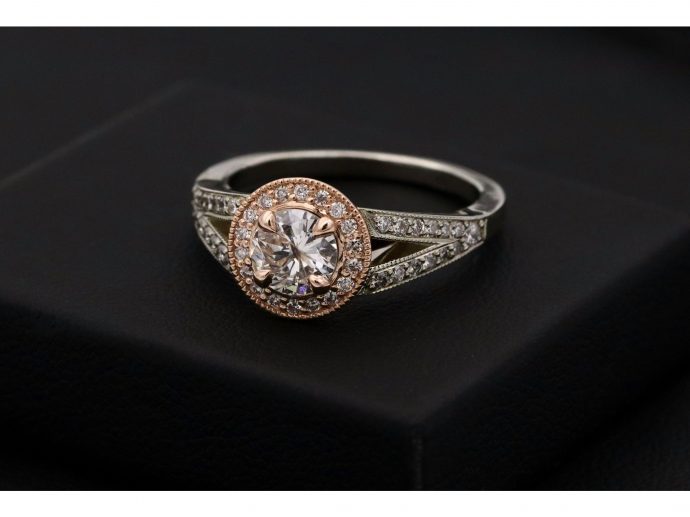
The prong setting is the most common for engagement rings, and it may comprise four to six prongs depending on the stone size. A solitaire setting highlights one center stone with a clean, timeless look. A halo surrounds the center diamond with smaller stones, creating the appearance of a larger centerpiece and adding sparkle. A bezel setting encircles the stone with a metal rim, offering a sleek, modern appearance and strong protection for active wearers.
When choosing a setting, consider lifestyle and aesthetics. For example, someone who works with their hands, exercises often, or prefers low-maintenance jewelry may favor a lower profile or protective bezel. On the other hand, someone seeking maximum sparkle may prefer a halo or pavé details. Comfort, snagging, stone exposure, and long-term upkeep should all influence the final choice.
Select the Center Stone Shape and the Right Metal
The center stone shape shapes the overall personality of the engagement ring. A round diamond is classic and known for radiant brilliance. An oval elongates the finger, while a pear shape creates an elegant, distinctive silhouette. An emerald cut emphasizes clean lines and a sophisticated, vintage-inspired look. A princess cut has sharp corners and a contemporary, geometric feel.
Vogue magazine highlights the recent resurgence of the marquise cut, thanks to celebs like Selena Gomez flaunting it. Marquise diamonds were well-loved in the 1970s and 1980s. The elongated cut has not been considered the most popular choice for engagement rings recently, but this subtle endorsement has given it significant attention.
Metal choice affects both appearance and maintenance. Platinum is naturally white, dense, and durable, making it a popular choice for long-term wear. Yellow gold delivers warmth and classic contrast, while rose gold provides a soft, romantic tone. The stone shape and metal should work together. For example, an emerald-cut diamond pairs beautifully with yellow gold for a vintage feel, while a round or oval diamond in platinum creates a bright, classic look.
Understand Diamond Quality Factors
Regardless of the cut, style, and metal you choose for your engagement ring, quality is the most important factor. You will expect the stone and the metal to last forever, and even long enough to pass on the ring as an heirloom. This is possible only if you prioritize quality when choosing your engagement ring.
Diamond quality is commonly evaluated through the 4Cs, namely carat weight, color, clarity, and cut. Carat refers to weight, not physical dimensions alone. Color is graded from D, which is colorless, to Z, which shows a light yellow or brown color. Clarity measures internal inclusions and surface blemishes, while cut determines how effectively the diamond interacts with light.
Cut quality deserves special attention because it strongly affects brilliance, sparkle, and fire. A well-cut diamond can appear livelier than a larger stone with weaker proportions. Rather than maximizing one C, balance all 4Cs according to your priorities and budget. Two diamonds with the same carat weight can differ significantly in appearance and value.
Consider the Band Style, Ring Profile, and Wedding Band Compatibility
The band may seem like a minor detail on the surface, but it affects comfort and overall style of the ring. A delicate band creates a light, feminine look, while a wider or more substantial band feels bold and can better support a larger center stone. Band width should complement both the wearer’s hand and the scale of the setting.
Ring profile should also be considered when choosing the piece. A flat band feels modern and sits smoothly against the finger. A rounded band offers a softer, traditional feel. A contoured band curves around the setting and can help a wedding band sit closer to the engagement ring.
Height is another practical consideration. A high setting may showcase the diamond beautifully but can catch on clothing or feel less secure during everyday activities. A lower profile often feels more practical. Before finalizing the design, check whether the engagement ring will align with a straight wedding band or whether it needs a curved, notched, or custom-fit companion ring.
Use an Engagement Ring Builder
For a beginner, it is easy to feel confused when you have no clues about the details related to cuts, styles, settings, gemstone quality parameters, and metal choices. While research or professional guidance may help, you can seek a simpler solution.
Designing a custom ring involves several connected decisions, from the setting and center stone to metal, carat, color, clarity, and sizing. TOVAA’s engagement ring builder gives clients a way to work through those choices in one place before the design moves forward through TOVAA’s custom process, where Marlee reviews the details before the ring is finalized.
Digital tools make it easier to compare combinations and visualize the design, but an experienced jeweler should still review the selections before production. A professional can confirm that the stone fits the setting, the proportions are balanced, the metal is appropriate, and the design will remain secure over time.
Confirm Ring Style and Finalize Practical Details
Accurate sizing is essential for comfort, security, and long-term wear. A ring that is too loose can spin or slip off, while one that is too tight can feel uncomfortable and may be difficult to resize depending on the design. Because finger size can change with temperature, time of day, and lifestyle, professional measurement is especially important for a custom order.
A Cosmopolitan feature suggests different ways to calculate your ring size at home before buying it. You can measure it using a thread, use a printable chart and a ring that already fits, or opt for a plastic sizer. For a thin or medium band, stay true to size. If the ring is thicker, size up a bit, but not by more than a half or full size.
Before approving production, review the complete specification. Confirm the budget, production timeline, resizing policy, warranty coverage, and care requirements. These details help prevent surprises and protect the investment. A custom ring should be reviewed as a finished design, not just a collection of individual choices.
Frequently Asked Questions
How do you choose the best setting for a custom engagement ring?
Choose a setting based on personal style, center stone shape, lifestyle, durability, and comfort. Solitaires feel timeless, halos add sparkle, bezels offer protection, and three-stone designs create a dimensional look. Consider daily activities, preferred maintenance level, and whether the ring will pair with a wedding band.
What matters most when choosing a diamond for an engagement ring?
Consider carat, color, clarity, and cut together. Cut strongly influences brilliance and sparkle, while carat affects apparent size and price. Color and clarity affect the stone’s visual purity. The best diamond balances these factors according to your budget and priorities rather than prioritizing one specification alone.4cs.gia+1
Why should a jeweler review a custom engagement ring design before production?
An experienced jeweler can check stone compatibility, setting security, proportions, structural integrity, sizing, and wedding band fit. They can also identify practical issues that may not be obvious in a digital preview, such as excessive height, thin metal sections, or a setting that does not properly support the chosen stone.
Key Takeaways
|
Design factor |
Key data or consideration |
|
Consumer preferences |
52% of American consumers prioritize design or uniqueness over brand, price, or stone size, according to Rapaport. |
|
Setting styles |
Prong, bezel, solitaire, and halo settings offer different combinations of appearance, stone security, and maintenance needs. |
|
Diamond quality |
The 4Cs—cut, color, clarity, and carat weight—are the standard factors used to evaluate diamond quality. |
|
Ring sizing |
Finger size can vary with temperature and time of day, making professional measurement useful before finalizing a custom ring. |
|
Wedding band compatibility |
Band width, setting height, and ring profile influence how comfortably an engagement ring pairs with a wedding band. |
A custom engagement ring is most successful when style and practicality are considered together. The right setting protects and showcases the center stone, while the stone shape, metal, band profile, and sizing determine how the ring looks and feels in everyday life. With thoughtful planning, a clear budget, and guidance from an experienced jeweler, couples can create a meaningful engagement ring that reflects their relationship and stays precious for generations.
Comments
