Categories more
- Adventures (62)
- Arts / Collectables (14)
- Automotive (77)
- Aviation (65)
- Bath, Body, & Health (123)
- Children (6)
- Cigars / Spirits (71)
- Cuisine (66)
- Design/Architecture (22)
- Electronics (63)
- Entertainment (36)
- Event Planning (115)
- Fashion (45)
- Finance (10)
- Gifts / Misc (6)
- Home Decor (118)
- Jewelry (41)
- Pets (3)
- Philanthropy (1)
- Real Estate (16)
- Services (44)
- Sports / Golf (14)
- Vacation / Travel (85)
- Watches / Pens (33)
- Wines / Vines (34)
- Yachting / Boating (67)



From Confusion to Luxury: How Casinos Changed Their Approach to Keep Players Rolling

Published
08/25/2026If you ask anyone to talk about the “tricks” that casino resorts perform in order to keep players at the tables, they’ll likely tell you about stuff like complimentary cocktails and some of the more infamous psychological ones, such as the lack of clocks and windows, making you less aware of the time.
There were others, too, particularly in larger casinos, such as haphazard floor designs and strange carpets that don’t clearly show the way to an exit. The idea is that no clear exit causes subtle confusion, a type of nudge theory to keep you playing. Bill Friedman popularized some of these ideas in the 1990s, and they became known as the Friedman Design.
Some of the tricks are now stereotypes
Yet, are these things necessarily true of today? We would argue not completely, especially for many upmarket casino resorts in places like Las Vegas and Macao. After all, who looks for a clock on the wall these days? If you want to know the time, you’ll look at your smartphone. But the upshot is that some casinos no longer use these famous tricks that have gone into folklore, and there is a very good reason for that.
It used to be held that confusion encouraged players to play more. That’s where the old ideas of the clocks and lack of natural light came from. Moreover, the same was true of the haphazard layouts we mentioned. However, in the late 1990s and 2000s, psychologists and design experts started to question whether confusion made money. They wondered if something else would instead – concepts like luxury, attainment, aspiration and comfort.
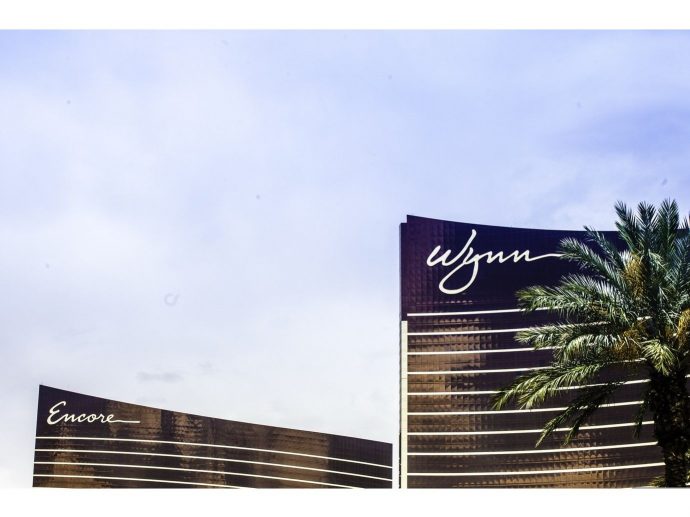
This shift in approach is known as the Playground Design, and it was probably most famously adopted by Steve Wynn, whose Wynn properties are among the most luxurious casinos in the world. Nevertheless, the concept of the Playground Design values comfort and aspiration.
The Playground Design promotes luxury and comfort
In effect, the Playground Design goes against the Friedman Design. It wants big open floors, where you can clearly see the exit. It also goes for fixtures like open windows, so natural light goes in. But above all, it places you in a setting that feels aspirational. In the simplest terms, when you are looking around and seeing opulence, you might say to yourself, “I fancy a bit of that,” and then try your luck on the tables.
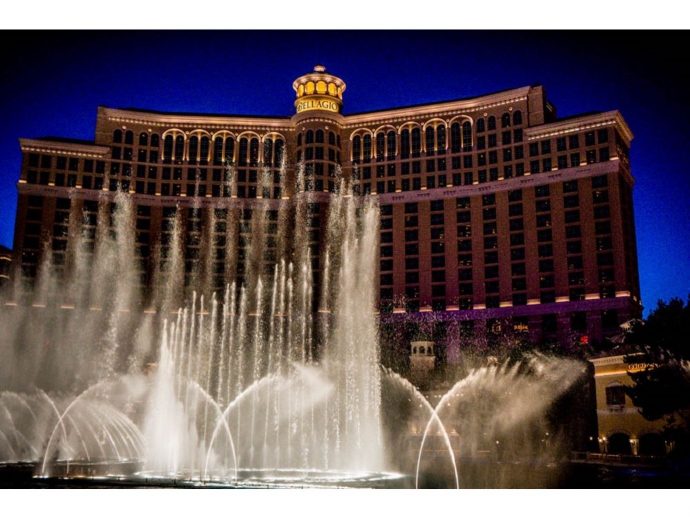
Arguably, there are other reasons, too. The rise of online casino platforms offering real-money roulette and blackjack created a clear and present danger to casino resort operators’ business, so many had to pull out the stops to make sure the experience of walking into a (physical) casino couldn't be replicated with iGaming. If you’ve walked into the lobby of the Wynn Las Vegas, you’ll know what we mean. The Playground Design was also used when the Bellagio was renovated in 1998.
The Bellagio also implemented Playground Design when it was renovated.
Humans react to their surroundings. Consider walking into a car showroom to purchase a Ferrari or Aston Martin. Those cars won't be placed in a dirty car lot; they'll be in an immaculate setting that is subtly part of the sales pitch. It is designed to make you feel that this is different from the norm. That’s similar to what high-end casinos do, transporting you somewhere aspirational.
Of course, that doesn't mean every casino follows the Playground Design, and many venues still do well by offering more chaotic designs and raucous atmospheres. But there is certainly a belief that luxury, comfort and aspiration, not confusion, are the keys to encouraging people to play longer and spend more. It goes completely against the stereotype.
Comments
