Categories more
- Adventures (209)
- Arts / Collectibles (375)
- Automotive (808)
- Aviation (378)
- Bath, Body & Health (1055)
- Children (118)
- Cigars / Spirits (278)
- Cuisine (723)
- Design / Architecture (1118)
- Electronics (230)
- Entertainment (162)
- Event Planning (295)
- Fashion (552)
- Finance (199)
- Gifts / Misc (141)
- Home Decor (575)
- Jewelry (409)
- Pets (92)
- Philanthropy (124)
- Real Estate (393)
- Services (223)
- Sports / Golf (213)
- Vacation / Travel (1054)
- Watches / Pens (233)
- Wines / Vines (862)
- Yachting / Boating (9083)



Group Glamping: How to Balance Privacy and Shared Space

Published
10/28/2026One of the greatest pleasures of glamping with friends or family is spending time together. Days can be filled with exploring the outdoors, evenings with conversation, and nights with the comfort of retreating to a tent. But sharing the same space for several days can bring different habits to the surface. Some people prefer an early night, others like to stay up talking, and some simply appreciate a little time to themselves.
The appeal of group glamping goes beyond spacious tents, beautiful furniture, and stylish decor. What makes the experience comfortable is having the freedom to share meals, conversations, and downtime without giving up personal space. Everyone should be able to enjoy the trip at their own pace.
How Much Space Do You Need for Group Glamping?
Sleeping capacity is often the first consideration when choosing a group tent. Yet a tent designed for eight people may feel crowded when all eight are inside. Mattresses, luggage, and personal belongings take up valuable floor space, leaving less room to move around as the tent reaches its full capacity.
When exploring inflatable tents, look beyond sleeping capacity and floor area. Standing height, interior layout, and the flexibility of the space all contribute to comfort. For a stay of several nights, start by planning where the mattresses will go, then consider whether there's enough room to change, store luggage, and move freely. A well-planned layout can be more valuable than extra square footage alone.
Larger tents also require more space at the campsite. Before booking, check the tent's full dimensions and allow room for stakes, guy lines, and entrances to ensure everything fits within the designated pitch.
How Can You Create Privacy in a Shared Tent?
Sharing a tent often means accommodating different routines and expectations of privacy. Even close friends may appreciate having their own space to change, rest, or organize personal belongings. In a completely open tent, someone getting up or turning on a light at night can easily disturb those who are already asleep.
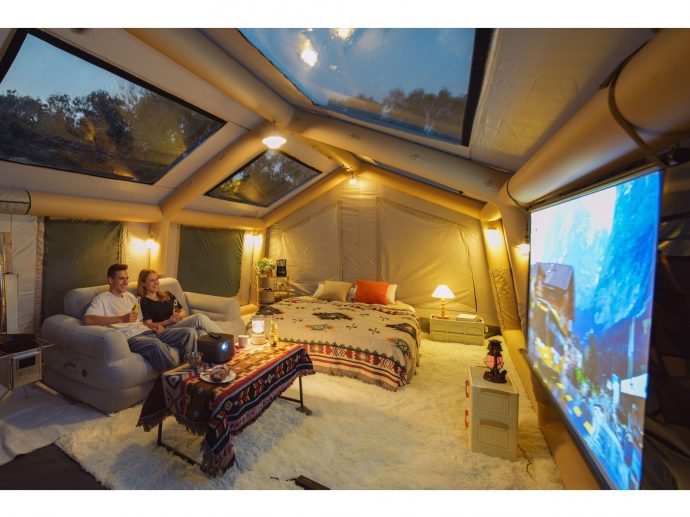
A tent with a flexible interior makes it easier to accommodate everyone's needs. Among large inflatable tents, the ZONKOO Draco offers 183 sq ft of interior space and a removable divider curtain. For groups staying together over several nights, the divider can separate sleeping, changing, or personal storage areas. When an open layout is preferred, removing it brings the space back together.
The divider offers visual privacy rather than the sound insulation of a separate room, but it allows the interior to serve different purposes throughout the trip. For guests with different routines, that flexibility means someone can turn in early while others continue enjoying their evening.
Where Should Everyone Spend Time Together?
One of the pleasures of group glamping is sharing breakfast, enjoying coffee, catching up, and relaxing after a day outdoors. But those moments don't all have to take place inside the tent. Once mattresses and luggage occupy much of the floor, adding tables and chairs can quickly make the space feel crowded.
A more comfortable arrangement gives indoor and outdoor spaces different purposes. The tent can remain a place for sleeping, changing, and quiet time, while breakfast, conversations, and group activities take place outside where the campsite permits. Those who want an early night can retreat indoors without bringing the evening to an end for everyone else.
Creating an inviting outdoor gathering area doesn't require elaborate furnishings. A suitable folding table, comfortable chairs, and practical lighting are often enough. The layout should also account for the weather, campsite rules, and neighboring campers, allowing everyone to enjoy the space without disturbing others.
How Do You Keep Everyone Comfortable Over Several Nights?
A shared tent is usually at its tidiest on the first day. After several nights of taking out shoes, jackets, toiletries, and other belongings, even a spacious interior can start to feel cluttered if nothing has a designated place.
When settling in, give everyone a space for their luggage and keep shared essentials together. Place frequently used items within easy reach, keep sleeping areas clear, and leave entrances and main walkways unobstructed. A little organization makes daily routines easier and leaves more time to enjoy the trip.
It's also helpful to agree on a few shared habits, such as lighting at night, wake-up times, and how communal areas will be used. When someone is ready to sleep, others can dim the lights and avoid unnecessary movement through the sleeping area. Group glamping doesn't need strict rules, but consideration for one another's routines makes the experience more comfortable.
Where Should You Spend Your Group Glamping Budget?
Glamping often brings to mind elegant furniture, decorative lighting, and carefully chosen accessories. Yet a more comfortable stay doesn't necessarily come from bringing more things. The most worthwhile additions are often those that solve problems you've actually experienced.
After a few group trips, it's easier to see where improvements would make a difference. Perhaps there's not enough privacy for changing or resting, the shared area needs better lighting, or the mattresses aren't comfortable enough for several nights. Identifying these issues before buying more equipment is more useful than filling the campsite with decorations.
Once you know what needs upgrading, seasonal promotions such asblack friday deals offer an opportunity to compare tents or sleeping essentials that address those needs. Before buying, check the dimensions, included accessories, warranty, and repair options. For larger tents, packed weight and storage requirements also deserve consideration.
Making thoughtful improvements based on previous trips can do more for long-term comfort than continually adding new equipment.
True Glamping Comfort Makes Room for Everyone
The comfort of group glamping isn't about making a tent look like a hotel. It's about giving everyone the freedom to choose when to join the group and when to retreat to their own space.
When sleeping, socializing, and personal areas work together, no one has to give up their usual routines simply because they're sharing a trip. What stays with you isn't the size of the tent, but the experience of being together while still enjoying the freedom to spend each day your own way.
For your next group glamping trip, start with the layout. Make room for time together and moments alone, and let both become a natural part of the experience.