





We've all experienced it: a quiet moment at home, suddenly interrupted by an unfamiliar sound from the air conditioner. A strange whir, a sudden clank, or an unexpected hiss can quickly turn relaxation into worry. Your AC system is a complex machine, and while some operational sounds are normal, others are critical messages it's trying to send. Ignoring these unusual noises can lead to bigger problems, impacting both your home comfort and your budget down the line.
Understanding what these different ac making strange noises what they mean is the first step toward effective troubleshooting and timely repair. As experts often emphasize, decoding these sounds is crucial for maintaining your system's health and ensuring consistent indoor comfort. For more detailed insights into specific AC noises, you might find additional information helpful from Comfort Central AC noises. In this guide, we'll help you identify common air conditioning sounds, from gentle hums to alarming screeches, so we can keep your home cool and comfortable without unexpected disruptions.
Understanding Normal AC Sounds: The Baseline for Comfort
Before we dive into the alarming cacophony, let's establish what a healthy air conditioner sounds like. A well-functioning AC unit, whether it's an indoor air handler or an outdoor condenser, should operate with a relatively consistent and predictable sound profile. These are the "comfort sounds" you want to hear:
- A Gentle Hum or Whir: This is the sound of the compressor and fans doing their job, circulating refrigerant and moving air. Modern AC systems typically operate between 25 and 55 decibels, which is comparable to a quiet conversation. Some of the latest indoor units, like Hitachi's airHome range, are engineered to be incredibly quiet, operating at decibel levels as low as 19dB—quieter than a library! This soft hum is a sign of efficient operation.
- The Whoosh of Airflow: You should hear the sound of air moving through your vents, indicating that your blower fan is effectively distributing conditioned air throughout your home. This is a natural part of the cooling process.
- A Soft Click at Startup and Shutdown: A single, soft click when your AC turns on or off is usually normal. This is often the sound of the thermostat's relay engaging or disengaging, or the contactor in the outdoor unit activating the compressor.
These normal sounds are the backdrop against which any unusual noises will stand out. By knowing what to expect, we can more easily identify when something is amiss.
Decoding Common AC Noises: What They Mean and What to Do
When your AC starts to sound less like a gentle breeze and more like a symphony of distress, it's time to pay attention. Here's a breakdown of common strange AC noises, what they typically signify, and our recommended course of action.
1. Banging or Clanking: The Sound of Mechanical Stress
A banging or clanking noise from your AC unit is rarely a good sign and often indicates a serious mechanical issue.
- What it means:Loose or Broken Parts: In the indoor unit, it could be a loose or unbalanced blower fan, or even fan blades hitting other components. In the outdoor unit, it might point to internal compressor failures, such as a broken piston pin or loose connecting rod.
- Unbalanced Components: An unbalanced fan blade, either in the indoor blower or outdoor condenser, can cause a persistent clanking as it rotates unevenly.
- Seriousness: High. This is a red flag. Running an AC with a banging compressor is akin to driving a car with a broken engine rod; it will only lead to more destruction and potentially catastrophic failure.
- What to do: Turn off your AC system immediately. This noise suggests significant internal damage is occurring. Contact a professional HVAC technician without delay.
2. Buzzing: Electrical Warnings or Frozen Coils
Buzzing noises can originate from both your indoor and outdoor units, with different implications for each.
- What it means:Outdoor Unit Buzzing: Often points to an electrical issue. This could be a faulty condenser fan motor, a malfunctioning capacitor (which helps start the motor), loose wiring, or a stuck contactor relay. In some cases, it might be due to a faulty compressor or damaged isolation feet, which are meant to absorb vibrations.
- Indoor Unit Buzzing: Frequently indicates frozen evaporator coils. This can be caused by low refrigerant levels, poor airflow due to a dirty air filter, or a clogged condensate drain line. When ice forms on the coils, it can restrict airflow and create a buzzing sound.
- Seriousness: Moderate to High. Electrical issues can pose safety risks, including fire hazards, and frozen coils can lead to system damage if not addressed.
- What to do: If the buzzing is from the outdoor unit, especially if accompanied by a burning smell or tripped breaker, turn off the system at the breaker and call a professional. For indoor buzzing due to suspected frozen coils, switch your thermostat to "OFF" and the fan to "ON." Inspect and replace your air filter if dirty, then allow the coils to thaw. If the issue persists or refreezes, contact a technician.
3. Hissing or Whistling: Leaks and Airflow Problems
These sounds often point to issues related to pressure or airflow within your system.
- What it means:Refrigerant Leak (Hissing): A distinct hissing sound, especially from the outdoor unit or refrigerant lines, is a classic sign of a refrigerant leak. Refrigerant is under high pressure, and as it escapes through a crack or hole, it produces this sound. It can also be an early indicator of high internal pressure within the compressor.
- Restricted Airflow (Whistling): A whistling sound, particularly from your vents, usually means air is struggling to move through a constricted space. Common culprits include a severely dirty air filter, blocked return or supply vents, or leaks in your ductwork. It's like the "tea kettle effect for your home."
- Seriousness: High for hissing (refrigerant leak), Moderate for whistling (airflow restriction). Refrigerant leaks are a serious environmental concern (especially older R-22 Freon) and can damage your compressor. Restricted airflow reduces efficiency and can lead to frozen coils.
- What to do: For any hissing sound, turn off your AC and call a professional immediately. Refrigerant handling requires EPA licensing. For whistling, first check and replace your air filter. Ensure all vents are open and unobstructed. If the whistling persists, inspect your ductwork for leaks or blockages, or call a technician to diagnose.
4. Screeching or Squealing: Worn Bearings and Belts
These high-pitched sounds are often a cry for lubrication or component replacement.
- What it means:Worn Motor Bearings: A high-pitched screeching or squealing often indicates that the bearings in your fan motor (either blower or condenser) are worn out and require lubrication or replacement. Metal-on-metal friction creates this sound.
- Loose or Failing Blower Belt: In older AC units with belt-driven blower motors, a squealing sound can mean the belt is loose, worn, or about to break.
- High Internal Compressor Pressure: A very high-pitched squealing from inside the compressor can signal dangerously high internal pressure, which is a critical issue.
- Seriousness: High. Ignoring these sounds can lead to motor failure, further damage to the compressor, or complete system breakdown.
- What to do: If you hear a high-pitched squealing from the compressor, shut off the AC immediately and call a professional. For other screeching or squealing, turn off the unit and contact a technician for inspection. Regular seasonal maintenance often includes lubricating motor bearings, which can prevent this issue.
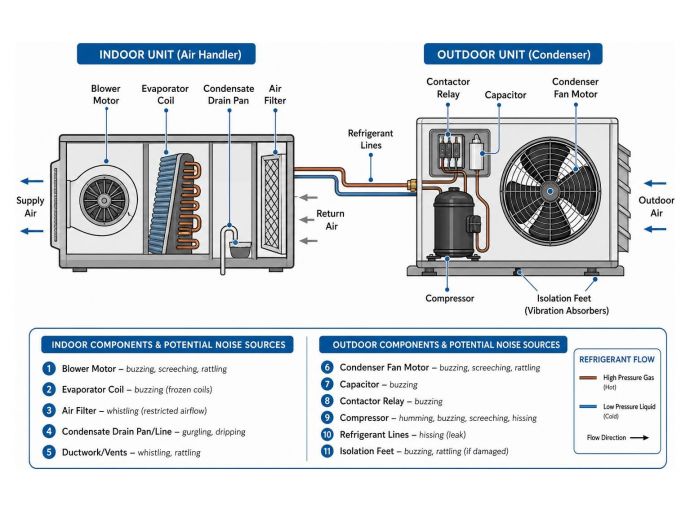
A diagram illustrating the main components of an AC system and potential noise sources.
5. Rattling or Thumping: Loose Parts and Debris
These noises are often less severe than banging or screeching, but still warrant attention.
- What it means:Loose Panels or Screws: The simplest cause is often a loose panel on either the indoor or outdoor unit, or loose screws.
- Debris: Small sticks, leaves, twigs, or other detritus can get caught in the outdoor condenser fan blades, causing a rattling or thumping sound as the fan spins. Indoors, a "thwapping" sound like playing cards on bicycle spokes might indicate debris in the blower blades.
- Unbalanced Fan: Similar to clanking, an unbalanced fan can cause a rattling.
- Seriousness: Low to Moderate. While not immediately catastrophic, prolonged rattling can loosen other components or indicate an underlying issue that could worsen.
- What to do: First, power down the unit at the thermostat and then at the circuit breaker. For the outdoor unit, carefully inspect for any debris caught in the fan blades and gently remove it. Check and tighten any loose screws on the exterior panels. For indoor rattling, check your return vents for loose covers. If the noise persists after these checks, a professional inspection is advisable.
6. Clicking: Normal vs. Problematic
A single click is normal, but persistent clicking signals a problem.
- What it means:Normal Operation: A single click when the unit starts or stops is typically the thermostat or contactor engaging.
- Persistent Clicking: If you hear repeated clicking throughout a cooling cycle, it could indicate a malfunctioning thermostat, a failing capacitor, a faulty relay switch, or a physical obstruction hitting the fan blades. Sometimes, rapid clicking can sound like a playing card in bicycle spokes.
- Seriousness: Moderate. While not always an emergency, persistent clicking can lead to motor failure or the unit failing to start.
- What to do: If it's a single click at startup/shutdown, no action is needed. If clicking is persistent, check for obvious obstructions in the fan blades (after powering down). If none are found, or if the clicking seems electrical, contact a technician. Electrical problems should always be handled by professionals.
7. Grinding or Chirping: Motor Wear and Lubrication
These sounds point to friction and wear within mechanical components.
- What it means:Worn Motor Bearings (Grinding): A low, rumbling, or grinding sound often indicates severely worn-out motor bearings in either the blower motor or the outdoor condenser fan motor. This means metal is rubbing against metal.
- Lubrication Issues (Chirping): A chirping sound can also be an early sign of motor bearings that are dry and need lubrication. It's one of the least serious but still indicates an issue that should be addressed.
- Debris: Sometimes, small pieces of debris caught in the blower assembly can also create a grinding sound.
- Seriousness: High for grinding, Moderate for chirping. Grinding suggests significant wear and imminent motor failure. Chirping is a warning that can prevent grinding if addressed promptly.
- What to do: Turn off the unit immediately if you hear grinding. This can quickly lead to motor burnout. Contact a professional for diagnosis and repair. For chirping, schedule a service appointment soon to have the motor bearings inspected and lubricated.
8. Bubbling or Gurgling: Refrigerant or Drainage Issues
These watery sounds suggest a problem with fluids in your system.
- What it means:Refrigerant Leak (Bubbling): A bubbling or gurgling noise, particularly from the refrigerant lines or indoor coil, can be another indicator of a refrigerant leak. Air or moisture entering the system along with escaping refrigerant can cause this sound.
- Clogged Condensate Drain: If you hear gurgling or bubbling, especially accompanied by water pooling around your indoor unit, it likely means your condensate drain line is clogged. The water that normally drains away is backing up.
- Seriousness: Moderate to High. Refrigerant leaks are serious. Clogged drains can lead to water damage, mold growth, and eventually cause your unit to shut down due to safety switches.
- What to do: If you suspect a refrigerant leak, turn off the AC and call a professional. If you suspect a clogged drain, you can try to clear it yourself using a wet/dry vac on the outdoor end of the PVC pipe. If the problem persists, or if you're unsure, contact a technician.
When to Call a Professional: Urgent AC Noises and Safety Risks
While some minor issues can be addressed with simple DIY steps, certain ac making strange noises what they mean that you need immediate professional help. We always recommend calling a professional for:
- Banging, Screeching, or Grinding: These noises almost always indicate serious mechanical failure, often involving the compressor or major motors. Continued operation can lead to irreparable damage and a full system replacement.
- Hissing (Suspected Refrigerant Leak): Refrigerant is a hazardous chemical, and handling it requires specialized training and EPA certification. Leaks are harmful to the environment and can severely damage your system.
- Persistent Buzzing (Electrical): Electrical problems can be dangerous, posing risks of fire or electrocution. Do not attempt to fix electrical issues yourself.
- Any Noise Accompanied by Burning Smells or Tripped Breakers: These are immediate safety hazards. Turn off your system at the main breaker and call for emergency service.
- Noises That Don't Resolve with Simple DIY Fixes: If you've tried basic troubleshooting (like changing filters or clearing debris) and the noise persists, it's best to have a trained technician diagnose the root cause.
Ignoring serious AC noises can have significant health and safety risks. Refrigerant leaks can be harmful to occupants, especially if older R-22 Freon is involved. Electrical issues can lead to fires. Mechanical failures can cause parts to break off and become projectiles. Proactive intervention is key to preventing these dangers and avoiding more extensive, costly repairs down the line.
DIY Troubleshooting: Simple Steps to Quiet Your AC
Before panicking, there are several simple DIY steps we can take to troubleshoot and potentially quiet a noisy AC unit. Remember to always turn off the power to your unit at the thermostat and the circuit breaker before performing any inspections or maintenance.
- Check and Clean/Replace Air Filters: A dirty air filter is the root of many HVAC evils. It restricts airflow, leading to whistling, buzzing (due to frozen coils), and making your system work harder, potentially causing other noises. We recommend checking your filter monthly and replacing it every 1–3 months, or more often if you have pets or allergies.
- Clear Debris from the Outdoor Unit: Power down the outdoor condenser unit. Visually inspect for any leaves, twigs, grass clippings, or other debris that might be caught in the fan blades or accumulating around the unit. Ensure there's at least two feet of clear space around the unit for optimal airflow.
- Tighten Loose Panels or Screws: With the power off, gently check the metal panels on both your indoor and outdoor units. Loose screws or vibrating panels can cause rattling noises. Use a screwdriver to tighten any that feel loose.
- Inspect Vents for Blockages: Ensure all supply and return vents inside your home are open and not blocked by furniture, curtains, or rugs. Restricted airflow can cause whistling or strain on the blower motor.
- Thaw Frozen Coils (If Buzzing Indoors): If you suspect frozen evaporator coils (indicated by indoor buzzing or poor cooling), switch your thermostat to "OFF" and the fan to "ON." This will allow warm air to circulate and melt the ice. Ensure your air filter is clean. Once thawed, switch the system back to normal operation. If it refreezes, call a professional.
- Clear the Condensate Drain Line: If you hear bubbling or gurgling and see water pooling, your condensate drain line might be clogged. You can often clear it by using a wet/dry vac on the outdoor end of the PVC pipe to suction out the blockage.
These simple checks can often resolve minor noise issues and prevent them from escalating.
Preventing Future Noise Issues: The Power of Regular Maintenance
The best way to avoid the question of "ac making strange noises what they mean" is to prevent the noises from happening in the first place. Regular, proactive maintenance is crucial for the longevity and quiet operation of your AC system.
- Seasonal Tune-Ups: We recommend scheduling professional HVAC maintenance twice a year—once in the spring before the cooling season and again in the fall before the heating season. During these tune-ups, technicians will inspect all components, clean coils, check refrigerant levels, lubricate moving parts (like motor bearings), tighten electrical connections, and identify potential issues before they become major problems. This proactive approach can catch worn bearings before they start grinding or a loose belt before it squeals.
- Consistent Filter Changes: As mentioned, a clean air filter is paramount. It ensures proper airflow, prevents coils from freezing, and reduces strain on your system, all of which contribute to quieter operation.
- Keep Units Clear: Regularly clear debris from around your outdoor condenser unit and ensure indoor units (like air handlers) have proper clearance and are free of obstructions.
- Listen Actively: Make it a habit to listen to your AC when it's working perfectly. Establishing this baseline will make it easier to detect any new, strange noises early on.
Skipping HVAC maintenance often costs more in the long run than proactive care. It's an investment that pays off through longer system life, lower energy bills, and, importantly, consistent, quiet home comfort.
Investing in Quiet: Modern AC Solutions
If you're in the market for a new AC system or considering an upgrade, we can proactively address noise concerns by choosing quieter models. Modern advancements in HVAC technology have made air conditioners significantly quieter than their predecessors.
- Variable-Speed Technology: Systems with variable-speed compressors and fan motors can operate at lower capacities for longer periods, maintaining consistent temperatures with less on/off cycling and significantly reduced noise levels. These units can often run at those impressive 19dB levels.
- Improved Insulation and Design: Manufacturers are increasingly designing units with better sound-dampening insulation, quieter fan blade designs, and more robust casings to minimize operational noise.
- Strategic Placement: When installing a new outdoor unit, consider its proximity to windows, patios, and outdoor living areas. Proper placement can help mitigate noise impact.
- Sound Blankets: For existing units, sound blankets specifically designed for compressors can help reduce noise output.
Investing in a high-efficiency, quiet AC system not only enhances your home comfort but also contributes to energy savings and peace of mind, knowing that your system is designed for silent operation.
Conclusion
When your AC starts making strange noises, it's not just an annoyance; it's your system communicating a need. Understanding what these different ac making strange noises what they mean empowers us to take appropriate action, whether it's a simple DIY fix or calling in a professional. Proactive planning, including regular maintenance and timely repairs, transforms your AC from a potential source of worry into a reliable investment in your home's comfort. By paying attention to these audio clues, we can ensure our homes remain cool, comfortable, and quiet for years to come. This article serves as a guide, but only a trained professional can accurately diagnose the cause of any persistent or serious sounds your AC makes.
