Categories more
- Adventures (119)
- Arts / Collectables (60)
- Automotive (109)
- Aviation (134)
- Bath, Body, & Health (273)
- Children (63)
- Cigars / Spirits (128)
- Cuisine (278)
- Design/Architecture (95)
- Electronics (99)
- Entertainment (60)
- Event Planning (151)
- Fashion (184)
- Finance (19)
- Gifts / Misc (51)
- Home Decor (222)
- Jewelry (151)
- Pets (34)
- Philanthropy (7)
- Real Estate (125)
- Services (79)
- Sports / Golf (60)
- Vacation / Travel (529)
- Watches / Pens (107)
- Wines / Vines (504)
- Yachting / Boating (145)



Storm-Damaged Trees in Chesapeake, VA: A Homeowner’s Safety Checklist

Published
08/14/2026Key Takeaways
- Prioritize safety and keep people away from unstable trees, limbs, and power lines.
- Inspect storm damage from a safe distance before starting cleanup.
- Have professionals assess split trunks, lifted roots, hanging limbs, or sudden tree lean.
- Healthy trees with minor damage may recover with proper pruning and care.
- Check Chesapeake regulations before removing trees or clearing debris near waterways or wetlands.
- Choose qualified, insured tree care professionals for hazardous storm damage.
High winds, soaking rain, and coastal storms can turn a familiar backyard tree into a serious property hazard. After a storm, the safest choice is not always the fastest cleanup. Homeowners should first protect people, identify immediate dangers, and carefully assess damaged trees before deciding whether to prune, monitor, or remove them.
For property owners who need local help evaluating a serious concern, 757 Tree Solutions provides tree removal Chesapeake, VA services for residential and commercial properties. The veteran-owned company has ISA-certified arborists who assess hazardous trees, plan removals around structures and landscaping, and manage cleanup throughout Chesapeake, including Great Bridge, Deep Creek, Grassfield, Hickory, Greenbrier, and nearby Hampton Roads communities.
Why Storm Damage Can Be Hard to Judge
A tree can look mostly intact from a window and still have structural damage. Wind can crack a trunk beneath the bark, loosen a major branch union, or shift roots below the soil line. Heavy rain makes the risk harder to judge because saturated ground may no longer hold roots as firmly as it did before the storm.
In Chesapeake, repeated storms and wet conditions can place ongoing stress on trees. A mature pine or hardwood that survives one storm may be more vulnerable during the next period of high wind. Avoid deciding that a tree is safe simply because it remains standing, and do not assume removal is necessary just because a few branches fell.
First Steps After a Storm
Begin with a slow, ground-level inspection from a safe distance. Do not walk beneath damaged limbs, climb onto a roof, or approach a tree that has shifted near a structure.
- Keep children, pets, visitors, and vehicles away from the affected area.
- Look for downed or low-hanging utility wires from a distance. Treat every wire as energized.
- Check for limbs above roofs, driveways, sidewalks, parked vehicles, fences, and play areas.
- Take photographs for insurance documentation without entering an unsafe zone.
- Call emergency services or the utility provider when a wire, roadway, or public access area is involved.
Warning Signs That Need Professional Attention
Some damage calls for an urgent professional evaluation, even if the tree has not fallen. Stay outside the potential drop zone and watch for these warning signs:
- Large, broken limbs suspended in the canopy are often called widowmakers.
- A fresh split through the trunk or at the point where major stems join.
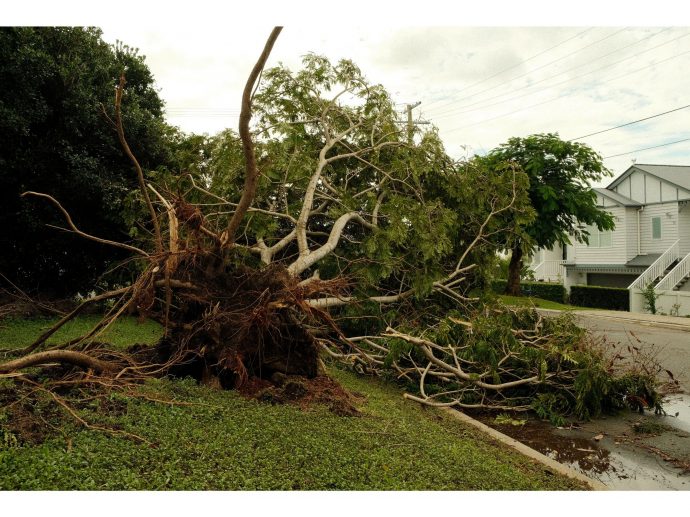
- Roots lifting from the ground, exposed roots, or fresh cracks in the soil near the base.
- A new lean that was not present before the storm.
- Branches resting on a roof, fence, another tree, utility line, or vehicle.
- Loose bark, cavities, fungal decay, or a hollow sound combined with storm damage.
When a Damaged Tree May Recover
Not every storm-damaged tree should be removed. A healthy tree that loses several small branches may recover well after proper pruning. Its likelihood of recovery depends on its health before the storm, the amount of living canopy left, the size and location of wounds, and whether roots or the main trunk were compromised.
Minor branch breakage is very different from a split trunk or lifted root plate. Avoid topping the tree or making random cuts to "balance" it. A careful assessment can identify branches that need corrective pruning while preserving a mature tree with a sound structure and a reasonable future.
Why DIY Cleanup Can Become Dangerous
Storm cleanup is not ordinary yard work. Broken limbs may be under tension or compression, which means they can snap, roll, or spring unexpectedly when cut. Wet ground, ladders, chainsaws, falling debris, and nearby homes make the work even more hazardous.
Never cut a branch or tree that is touching, leaning toward, or close to a power line. Do not use a ladder and a chainsaw together, and do not attempt to pull down a hung-up limb with a rope. Small, fully detached debris that is safely reachable from the ground may be suitable for basic cleanup. Larger limbs and unstable trees require trained crews and appropriate equipment.
Chesapeake Rules, Public Trees, and Private Responsibility
Responsibility often depends on where the trunk is rooted, not where the branches or fallen debris land. Under the City of Chesapeake tree removal policy, the City removes City-owned trees in the right-of-way and portions of private trees that obstruct the right-of-way, while the remaining private-property debris is generally the owner's responsibility.
For eligible residential debris, homeowners can request curbside bulk collection and should keep limbs away from vehicles, utility poles, hydrants, and other obstructions. Collection procedures may change after a major weather event, so confirm the current instructions before placing large branches at the curb.
Special Care Near Waterways and Wetlands
Properties near tidal waters, wetlands, or ditches connected to sensitive waterways, or within Chesapeake Bay Preservation Areas, may require additional review before tree removal or major site disturbance. Resource Protection Areas can include protected buffers where cleanup, removal, replacement planting, or equipment access may be regulated.
Maintaining the structural integrity of your home, especially when located in regulated areas, extends beyond landscaping to critical components like the roof, which also plays a vital role in protecting your property from water intrusion and environmental factors. For comprehensive assessments and repairs in such sensitive locations, consulting a residential roofing contractor ensures that any work complies with local building codes and environmental guidelines while safeguarding your home against potential damage.
Check whether the property is within a Chesapeake Bay Preservation Area before work begins. If the boundary is unclear, contact the City or a knowledgeable local professional before cutting, grading, removing stumps, or moving debris through a protected area.
How to Choose a Tree Care Professional
Price matters, but storm work should be chosen based on safety, qualifications, and a clear scope of work. Before authorizing work, ask for:
- Proof of licensing, liability insurance, and workers' compensation coverage.
- An arborist assessment for trees with major structural damage or uncertain recovery potential.
- A written plan covering pruning or removal, hauling, stump work, and final cleanup.
- Details about protecting lawns, septic areas, driveways, fences, and nearby structures.
- Clear payment terms, with caution around anyone demanding full payment before an inspection.
A Simple Storm-Damage Decision Guide
- No major damage: Monitor the tree and arrange routine maintenance if needed.
- Small broken branches: Schedule proper pruning once the area is safe.
- Large hanging limbs: Keep everyone clear and contact a qualified professional.
- Uprooted or sharply leaning tree: Treat it as an urgent hazard.
- Tree touching a power line: Stay away and contact the utility provider.
- Damage near water or wetlands: Confirm Chesapeake requirements before work starts.
Conclusion
Fast action after a storm does not have to be rushed. Secure the area, stay clear of wires and unstable limbs, document visible damage, and check local responsibilities before cleanup begins. A professional assessment can protect people and property while helping to preserve trees that still have a good chance of recovery.
Comments
