Categories more
- Adventures (51)
- Arts / Collectables (14)
- Automotive (36)
- Aviation (11)
- Bath, Body, & Health (76)
- Children (6)
- Cigars / Spirits (71)
- Cuisine (64)
- Design/Architecture (22)
- Electronics (13)
- Entertainment (4)
- Event Planning (12)
- Fashion (45)
- Finance (10)
- Gifts / Misc (6)
- Home Decor (45)
- Jewelry (41)
- Pets (3)
- Philanthropy (1)
- Real Estate (16)
- Services (23)
- Sports / Golf (14)
- Vacation / Travel (66)
- Watches / Pens (14)
- Wines / Vines (33)
- Yachting / Boating (67)


The 5 Best Advertising Agencies in Florida for Premium and Luxury Brands


Published
09/09/2026Finding a truly effective advertising agency in Florida feels daunting when directories overflow with five-star profiles. Only a handful know how to reach affluent buyers and turn polished creative into trackable revenue.
We analyzed 15 Florida-based firms, scoring public case studies and ranking outcomes in dollars, not impressions. The result: five category leaders, from owner-led growth specialists in Fort Myers to hospitality, tourism, real-estate, and multicultural experts in Miami and Fort Lauderdale. There is no single "best," only the right fit for your growth goal.
How We Chose the Best Florida Agencies
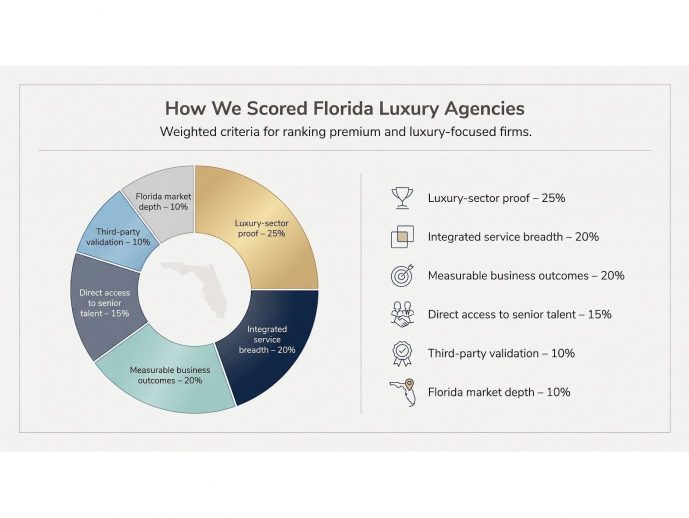
We reviewed public case studies, award databases, and verified reviews to see who converts strategy into revenue. Our model weights luxury-sector proof (25 percent), integrated service breadth (20 percent), measurable business outcomes (20 percent), direct access to senior talent (15 percent), third-party validation (10 percent), and Florida market depth (10 percent). Named client metrics and independently judged awards earned full credit; unsupported claims scored zero. We then named one winner per specialty.
1. Quenzel Marketing Agency: Best for Integrated Growth and Accountability
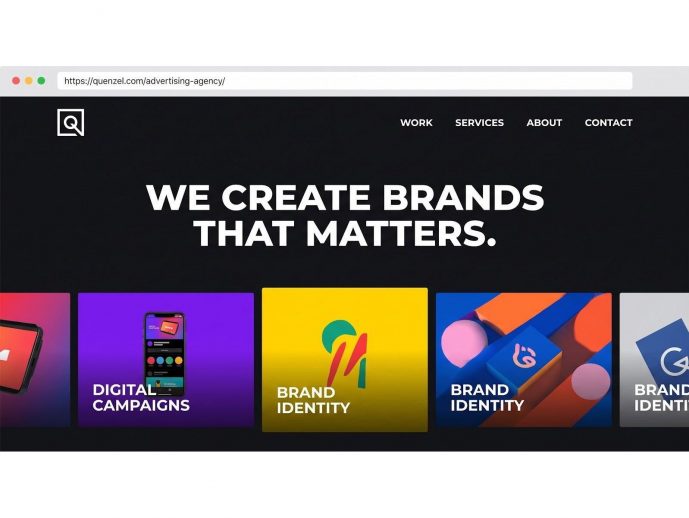
Quenzel is a ten-person Fort Myers shop led by founders Earl and Colleen Quenzel. For more than 20 years it has served luxury resorts, private-aviation firms, and premium healthcare providers with one promise: every dollar spent must trace back to revenue. Campaigns run on a real-time dashboard linking spend, placements, and conversions, and the owners work the accounts themselves.
Readers who want a concise summary of its advertising capabilities can review this overview. A recent Southwest Florida ophthalmology client wanted full waiting rooms, not pretty ads; after voice-of-patient research, a 30-second spot in targeted news breaks helped the clinic report double-digit surgery growth tied to specific airtimes.
Pros: principal-level attention, plus strategy, creative, media, and measurement under one roof.
Cons: capacity fills quickly, and third-party awards are limited, so confirm timelines and take reference calls.
2. Tambourine: Best for Luxury Hotels and Resorts
Since 1994 this Fort Lauderdale agency has marketed hospitality exclusively, pairing brand storytelling with booking technology that keeps revenue on property instead of with online travel agencies. Its monthly program combines direct-booking websites, metasearch, CRM, and performance media, and it won six 2025 Travel Weekly Magellan Awards. A competitive targeting plan for Lotte New York Palace produced more than 7.6 million impressions and over 1,000 tracked on-property visits.
Pros: hospitality focus and closed-loop analytics.
Cons: overbuilt for non-hotel brands, with East Coast support hours.
3. Starmark: Best for Tourism and Destination Brands
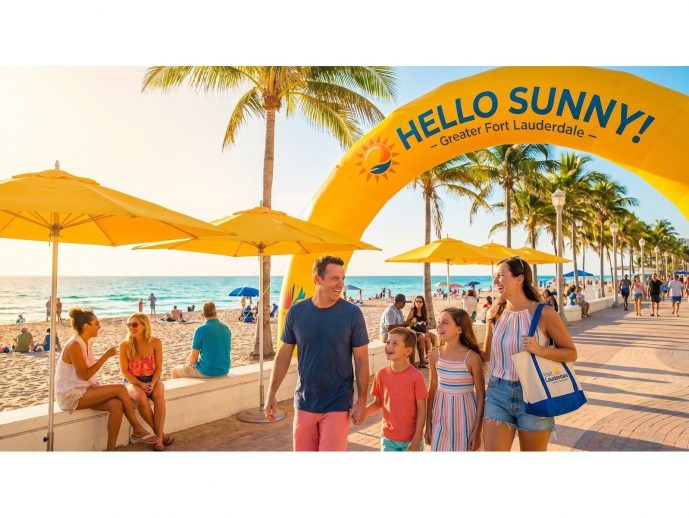
Based in Fort Lauderdale since 1998, Starmark pairs large-scale creative with data science and an in-house R&D lab. Its "Hello Sunny" rebrand recast Greater Fort Lauderdale as a mindset rather than a geography, spreading color-blocked visuals across billboards, social, video, and Sunny.org. Hotel bookings rose 54 percent during the 2012 to 2014 reporting period, with hotel-page traffic up 21 percent.
Pros: bold creative tied to commercial KPIs.
Cons: flagship metrics are a decade old, so request recent examples.
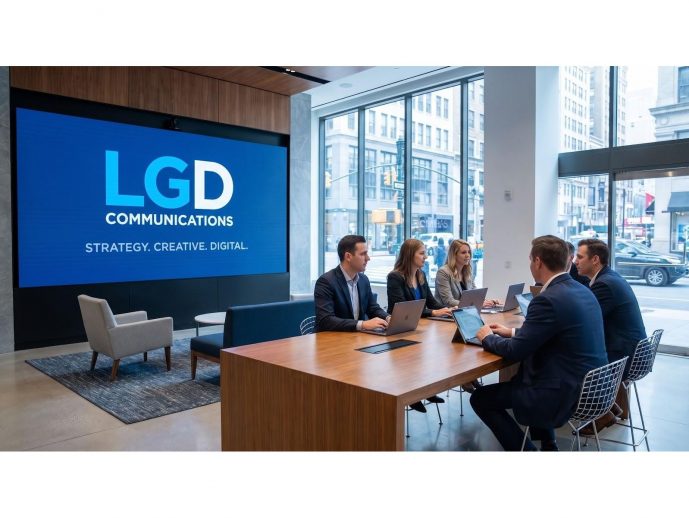
4. LGD Branding + Marketing: Best for Luxury Real Estate
Founded in Miami in 1988, LGD has guided developers through several boom-and-bust cycles. Selling eight-figure condominiums takes more than brochure photography, so the agency links cinematic renderings and high-touch events to paid media that screens for high-net-worth prospects, then hands qualified leads to brokers. On Trump Hollywood, public reports credit its strategy with helping the 200-unit oceanfront tower sell out in 16 months for $306 million.
Pros: concept-to-closing control of ultra-luxury launches.
Cons: a narrow niche and modest public review volume.
5. Republica Havas: Best for Multicultural Luxury Reach
Founded in Miami in 2006, Republica Havas blends cultural fluency with the scale of the global Havas network, helping premium brands reach U.S. Hispanic, Latin American, and bilingual audiences without diluting luxury positioning. In April 2025 its health group won Best Hispanic Campaign of the Year at the DTC National Conference. A Spanish-first campaign for Baptist Health's Miami Cancer Institute united more than 3,100 donors and raised $1.39 million.
Pros: multicultural expertise backed by Havas data science.
Cons: network scope can raise minimum fees.
How to Choose the Right Florida Advertising Agency
Start with your core metric, not the agency reel: direct bookings, reservations, or appointments. Ask each contender to show a live dashboard that links media spend to revenue, and keep probing if the answer stops at impressions. Meet the people who will touch the account, and keep administrator rights to ad platforms, analytics, and creative files. Break down retainers, production, technology fees, and media mark-ups, then check exclusivity clauses. Finally, call two comparable clients and ask for a 90-day plan with KPIs before you sign.
Frequently Asked Questions
What is the best advertising agency in Florida for a premium brand?
There is no single winner. Quenzel suits owner-run service businesses that need full-funnel attribution, Tambourine excels at hotel bookings, and LGD leads high-rise launches. Focus on fit, and start by defining what a luxury brand must prove at the point of purchase.
How much does a Florida advertising agency cost?
Premium retainers typically start near $10,000 per month and rise with media spend, production, and technology fees. Integrated programs often exceed $20,000, and one-time brand-platform projects begin around $50,000. Ask for a current line-item estimate, because rates shift annually.
Conclusion
Florida offers a specialist for nearly every luxury growth goal. Define your objective, verify each contender's proof of performance, and choose the partner whose accountability matches the results you need.
Comments
