Categories more
- Adventures (17)
- Arts / Collectables (14)
- Automotive (36)
- Aviation (11)
- Bath, Body, & Health (76)
- Children (6)
- Cigars / Spirits (32)
- Cuisine (16)
- Design/Architecture (22)
- Electronics (13)
- Entertainment (4)
- Event Planning (5)
- Fashion (45)
- Finance (10)
- Gifts / Misc (6)
- Home Decor (45)
- Jewelry (41)
- Pets (3)
- Philanthropy (1)
- Real Estate (16)
- Services (23)
- Sports / Golf (14)
- Vacation / Travel (59)
- Watches / Pens (14)
- Wines / Vines (24)
- Yachting / Boating (17)



The Art of Designing Custom Engagement Rings

Published
09/01/2026The Fundamentals of Creating Custom Engagement Rings
An engagement ring is far more than just a piece of jewelry; it is a profound symbol of love, commitment, and the unique story two people share. For such a significant token, many couples seek something truly special – a ring that perfectly embodies their personal connection and individual style. This is where the art of designing custom engagement rings truly shines.
Creating a bespoke ring allows for unparalleled personalization. From selecting the ideal metal to choosing the perfect gemstone and crafting intricate details, every element reflects the wearer’s distinct personality and the couple's journey. We understand the desire for a piece that is as unique as the love it represents.
In this comprehensive guide, we will explore the fascinating process of bringing a custom engagement ring to life. We will delve into the various design considerations, material choices, and the meticulous craftsmanship involved. The journey involves exploring a myriad of choices, from selecting the perfect centerpiece – whether it’s a natural or lab-grown diamond – to deciding on the ideal metal. Understanding these options, including insights into custom engagement rings natural and lab-grown diamonds, is a crucial first step. Join us as we uncover the artistry behind creating an enduring symbol of your love.
The journey of creating a custom engagement ring is a blend of artistic vision and technical precision. It begins with an idea, often inspired by personal stories, design aesthetics, or even family heirlooms. This initial concept is then meticulously translated into a tangible design through several fundamental stages, ensuring both beauty and structural integrity.
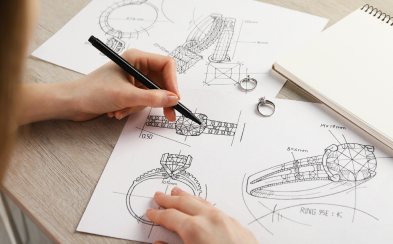
One of the first steps in modern custom jewelry design involves Computer-Aided Design (CAD) modeling. This advanced technology allows artisans to create highly detailed 3D renderings of the ring, providing a precise visual representation before any metal is touched. Clients can review these digital models, making adjustments to every curve, dimension, and stone placement. This iterative process ensures that the final design perfectly aligns with their vision. CAD modeling is particularly crucial for complex designs, allowing for exact symmetry and intricate detailing that would be challenging to achieve through traditional sketching alone. It minimizes errors and provides a clear blueprint for the subsequent manufacturing stages.
Once the CAD design is approved, the physical creation begins. There are several casting methods employed, with lost-wax casting being one of the most common and effective for fine jewelry. In this process, a wax model of the ring is created, either directly from the CAD file using a 3D printer or meticulously hand-carved. This wax model is then encased in a plaster-like material, which is heated to melt away the wax, leaving a perfect mold. Molten precious metal is then poured into this cavity, taking the exact shape of the original wax.
Alternatively, some custom pieces, particularly men's wedding bands, might involve hand-forging. This traditional technique involves shaping metal by hammering it into the desired form. Hand-forging can result in a denser, stronger metal structure, as the hammering process compacts the metal grains. This method is often favored for its artisanal appeal and the unique character it imparts to each piece.
Understanding ring profiles is also essential for both aesthetics and comfort. Profiles refer to the cross-sectional shape of the band, which can range from classic D-shaped, round, flat, or comfort-fit (domed on the inside). The choice of profile significantly impacts how the ring feels on the finger and how it interacts with daily wear. For men's wedding bands, especially, a comfort-fit profile is highly sought after due to its ergonomic design, which reduces friction and allows for easier removal.
The goal of these fundamental techniques is to achieve exceptional structural integrity. An engagement ring or wedding band is meant to be worn daily for a lifetime, enduring various activities and environmental factors. Therefore, every design choice, from the thickness of the band to the security of the stone settings, is made with durability in mind, ensuring the piece remains a cherished symbol for generations.
Selecting Precious Metals: 18K Yellow Gold vs. Alternative Alloys
The choice of metal is a cornerstone in designing any custom ring, profoundly influencing its appearance, durability, and value. For many, the classic allure of yellow gold remains unparalleled, and within this category, 18K yellow gold stands out as a popular and balanced choice, especially for men's wedding bands.
18K gold signifies a purity level of 75% pure gold, alloyed with 25% other metals, typically silver, copper, and sometimes zinc. This specific composition is why 18K gold is often stamped with "750" (meaning 750 parts per 1000 are pure gold). The high percentage of pure gold gives 18K yellow gold its rich, warm hue, a color that is both luxurious and timeless. This balance of purity and alloy metals is crucial. Pure 24K gold, while 100% pure, is exceedingly soft and malleable, making it impractical for everyday jewelry like wedding bands, which need to withstand considerable wear.
When considering men's wedding bands, the durability of 18K gold is a significant advantage over 24K. While 24K gold is too soft for daily wear, 18K gold offers a good compromise. It is harder and more resistant to scratches and dents than 24K, yet still retains a higher gold content compared to 14K gold, which is 58.3% pure gold. This higher gold content in 18K contributes to its richer color and often, a more substantial feel due to its higher metal density. The average price of a handmade 18K yellow gold men's wedding band ranges from $2,000 to $5,000, with specific artisan pieces, such as a listed handmade 18K yellow gold band, priced around $3,290.00, reflecting its quality and craftsmanship.
Beyond yellow gold, other popular precious metals include platinum, white gold, and rose gold. Platinum is a naturally white, incredibly dense, and highly durable metal, prized for its hypoallergenic properties and resistance to tarnish. Its inherent strength makes it an excellent choice for settings that need to secure valuable gemstones. White gold, on the other hand, is yellow gold alloyed with white metals like palladium or nickel, and then typically rhodium-plated to achieve its bright white finish. Rose gold, with its distinctive pinkish hue, is created by alloying gold with a higher proportion of copper. Each alloy composition brings its own set of characteristics in terms of color, hardness, and maintenance requirements.
For men's wedding bands, yellow gold remains a dominant choice, accounting for approximately 40% of all men's wedding ring sales. This enduring popularity speaks to its classic appeal and the warm, traditional aesthetic it offers. The metal density of 18K gold also contributes to a satisfying weight on the finger, conveying a sense of quality and substance. When selecting a metal, consider not only personal preference but also lifestyle, desired durability, and the specific characteristics each alloy brings to the table.
Diamond and Gemstone Sourcing Considerations
The heart of many custom engagement rings and an important aspect even for wedding bands that incorporate stones, lies in the selection of its central diamond or gemstone. The process of sourcing these precious elements is as critical as the metal choice, encompassing ethical considerations, quality assessment, and personal preferences.
When choosing a diamond, the industry standard "4Cs" — Carat, Cut, Color, and Clarity — serve as the universal grading system. Carat refers to the diamond's weight, not its size. Cut is perhaps the most crucial factor, determining how well a diamond's facets interact with light, influencing its brilliance and sparkle. Color grades range from D (colorless) to Z (light yellow or brown), with colorless diamonds being the most prized. Clarity assesses the presence of internal inclusions (blemishes) and external blemishes, with flawless diamonds being the rarest. Understanding these factors is paramount for making an informed decision about the quality and value of your chosen stone.
Beyond the 4Cs, ethical sourcing has become a paramount concern for many couples in recent years. This involves ensuring that diamonds and gemstones are mined and traded responsibly, without contributing to conflict, human rights abuses, or environmental damage. Reputable jewelers commit to sourcing stones through channels that adhere to strict ethical guidelines, often participating in initiatives like the Kimberley Process Certification Scheme for diamonds. This commitment extends to understanding the origin of the stones and the conditions under which they were obtained.
The choice between natural and lab-grown diamonds is another significant consideration in today's market. Natural diamonds are formed deep within the Earth over billions of years, while lab-grown diamonds are created in controlled environments using advanced technological processes that replicate natural conditions. Both are chemically, physically, and optically identical, differing primarily in their origin and often, their price point. Lab-grown diamonds offer an appealing option for those seeking a more budget-friendly choice or wishing to ensure a specific ethical provenance. For those interested in exploring the nuances of these choices further, a comprehensive guide on various gold karats for men's wedding bands also often touches upon the broader context of precious materials and their sourcing.
For wedding bands, while often simpler in design, the option to incorporate accent stones or a unique center stone is available. These could be smaller diamonds, sapphires, rubies, or other gemstones that hold personal significance. The choice of these center stones or accent stones will also be guided by the 4Cs, ethical sourcing, and how they complement the chosen metal and overall design of the ring. The goal is to select a stone that not only captures the eye but also resonates with the values and story of the couple.
Handmade vs. Machine-Crafted Fine Jewelry
The distinction between handmade and machine-crafted fine jewelry is significant, particularly when discussing custom pieces like engagement rings and men's wedding bands. While both methods can produce beautiful rings, they differ fundamentally in their production process, cost, structural properties, and inherent value.
Handmade jewelry, by its very definition, involves a high degree of labor intensity. Skilled artisans meticulously shape, file, solder, and polish each component by hand, often using traditional tools and techniques passed down through generations. This hands-on approach allows for unparalleled precision and the ability to execute intricate, bespoke designs that might be impossible or impractical for machines. The artisan's touch imbues each piece with a unique character and a subtle variation that speaks to its individual creation. This craftsmanship extends to specific details like hand-carving, wax modeling, and grain setting, where the human eye and hand can adapt to the unique properties of the metal and stones.
The production cost of handmade jewelry is naturally higher due to the significant time, skill, and labor involved. Handmade wedding bands typically cost 20-30% more than machine-made bands. This premium reflects the artisan's expertise, the individualized attention given to each piece, and the absence of mass production efficiencies. For example, a handmade 18K yellow gold men's wedding band priced at $3,290.00 directly reflects this investment in craftsmanship.
In terms of structural density, handmade rings, particularly those that are hand-forged, can often possess a denser, more compact metal structure compared to cast rings. Hand-forging involves hammering the metal, which can compress its grain, potentially leading to increased strength and durability. Cast rings, while highly precise due to CAD and modern casting methods, can sometimes have microscopic porosity within the metal, which might slightly reduce their overall density compared to a meticulously hand-forged piece.
Machine-made jewelry, conversely, relies on mass production techniques. While highly efficient and cost-effective, these methods often involve casting from pre-designed molds or using automated milling machines. This allows for consistent quality across multiple identical pieces and significantly reduces labor costs. However, the level of customization is generally limited to pre-set parameters, and the unique "soul" of an artisan's touch may be less apparent.
The artisanal value of a handmade piece is a key differentiator. It's not just about the finished product, but the story of its creation, the skill of the craftsman, and the unique connection it fosters between the wearer and the maker. For a custom engagement ring or a significant piece like an 18K yellow gold men's wedding band, choosing handmade often means investing in a piece of art that carries a deeper personal resonance and heirloom potential.
Craftsmanship Techniques in Custom Engagement Rings
The creation of a custom engagement ring is a testament to the diverse and intricate craftsmanship techniques employed by master jewelers. These methods transform raw materials into enduring symbols of love, each technique contributing to the ring's unique beauty and structural integrity.
One of the foundational techniques in custom jewelry is hand-carving, often involving wax models. After the initial CAD design, a skilled artisan may hand-carve a detailed wax model of the ring. This allows for a tactile refinement of the design, ensuring that intricate details, textures, and contours are perfectly executed before the metal casting process. Wax models are particularly advantageous for creating complex designs, filigree work, or unique sculptural elements that require a delicate touch.
Following casting, extensive metalwork precision comes into play. This involves shaping, filing, and soldering the metal components, often under magnification, to achieve the exact dimensions and seamless joins. Artisans use a variety of specialized tools to refine the ring's form, ensuring that all surfaces are smooth, symmetrical, and free from imperfections. This stage is critical for establishing the ring's overall aesthetic and comfort.
Hand-polishing is another crucial step that brings the metal to life. This meticulous process involves using progressively finer abrasive compounds to achieve the desired finish, whether it's a high mirror shine, a soft satin, or a matte texture. Hand-polishing not only enhances the metal's luster but also smooths out any microscopic imperfections, creating a luxurious feel.
For rings featuring gemstones, grain setting (also known as pavé setting) is a popular bespoke detailing technique. In this method, tiny beads of metal are raised from the surface of the ring to hold small diamonds or gemstones in place, creating a continuous, sparkling surface. This requires immense precision and a steady hand to ensure each stone is securely set and aligned perfectly. Other setting styles, such as prong, bezel, or channel settings, also demand expert craftsmanship to ensure the stones are both beautiful and secure.
These craftsmanship techniques are what elevate a custom engagement ring or men's wedding band beyond a mere piece of jewelry. They embody the dedication, skill, and artistic vision required to create a truly bespoke item, ensuring that every detail, from the overall form to the most minute embellishment, contributes to its enduring beauty and personal significance.
Metal Durability and Daily Wear Resistance
When investing in a custom engagement ring or a men's wedding band, particularly one made from 18K yellow gold, understanding its durability and resistance to daily wear is paramount. A wedding band is meant to be worn continuously, and its ability to withstand the rigors of everyday life is a key factor in its long-term appeal.
The tensile strength of a metal refers to its resistance to breaking under tension. While pure gold (24K) is very soft and has low tensile strength, alloying it with other metals significantly increases its strength. 18K gold, being 75% pure, offers a good balance. It is considerably harder and more durable than 24K gold, making it suitable for daily wear. However, it is still softer than 14K gold, which has a higher proportion of alloy metals (58.3% pure gold). This means 18K gold will be more susceptible to scratching and denting than 14K gold.
Scratch resistance is a common concern for wedding bands. While no precious metal is entirely scratch-proof, 18K gold will show signs of wear over time. Scratches on gold, particularly yellow gold, often appear as a displacement of metal rather than a loss. This means the gold is pushed around on the surface, creating visible marks. These minor scratches contribute to what is known as a "patina" – a soft, worn finish that many owners appreciate as a sign of their ring's journey and history. However, deeper scratches or dents can occur with significant impact.
Compared to 14K gold, 18K gold's higher purity means it has a slightly richer color and is generally more hypoallergenic. However, for those in professions involving heavy manual labor or frequent exposure to abrasive surfaces, 14K gold might offer a marginally more scratch-resistant option due to its increased alloy content. Conversely, 24K gold's extreme malleability makes it entirely unsuitable for wedding bands, as it would easily deform and wear down.
Long-term wear for an 18K yellow gold wedding band will involve developing a natural patina. This can be viewed as part of its character, but for those who prefer a consistently polished look, periodic professional polishing will be necessary. This process removes surface scratches and restores the original luster. It's also important to note that while 18K gold is durable, it's advisable to remove the ring during activities that could expose it to harsh chemicals, extreme impacts, or abrasive materials to preserve its appearance and integrity for years to come.
Popular Aesthetics, Settings, and Finishing Styles
The aesthetic appeal of a wedding band, particularly for men, is deeply personal. While the metal purity like 18K yellow gold sets the foundation, the choice of settings, finishes, and overall style truly defines the ring's character. In 2026, we see a blend of timeless classics and contemporary trends influencing popular choices.
For men's wedding bands, simplicity and comfort often take precedence, but this doesn't mean a lack of style. Band width is a primary consideration, with common widths ranging from 4mm to 8mm. A wider band makes a bolder statement, while a narrower one offers a more understated elegance. The choice often depends on finger size, personal preference, and lifestyle.
While engagement rings feature intricate settings like prong, bezel, and channel to secure diamonds, men's wedding bands typically have simpler designs. However, if a band incorporates stones, they are often set flush, channel-set, or in a subtle bezel setting to protect them from daily wear and maintain a sleek profile.
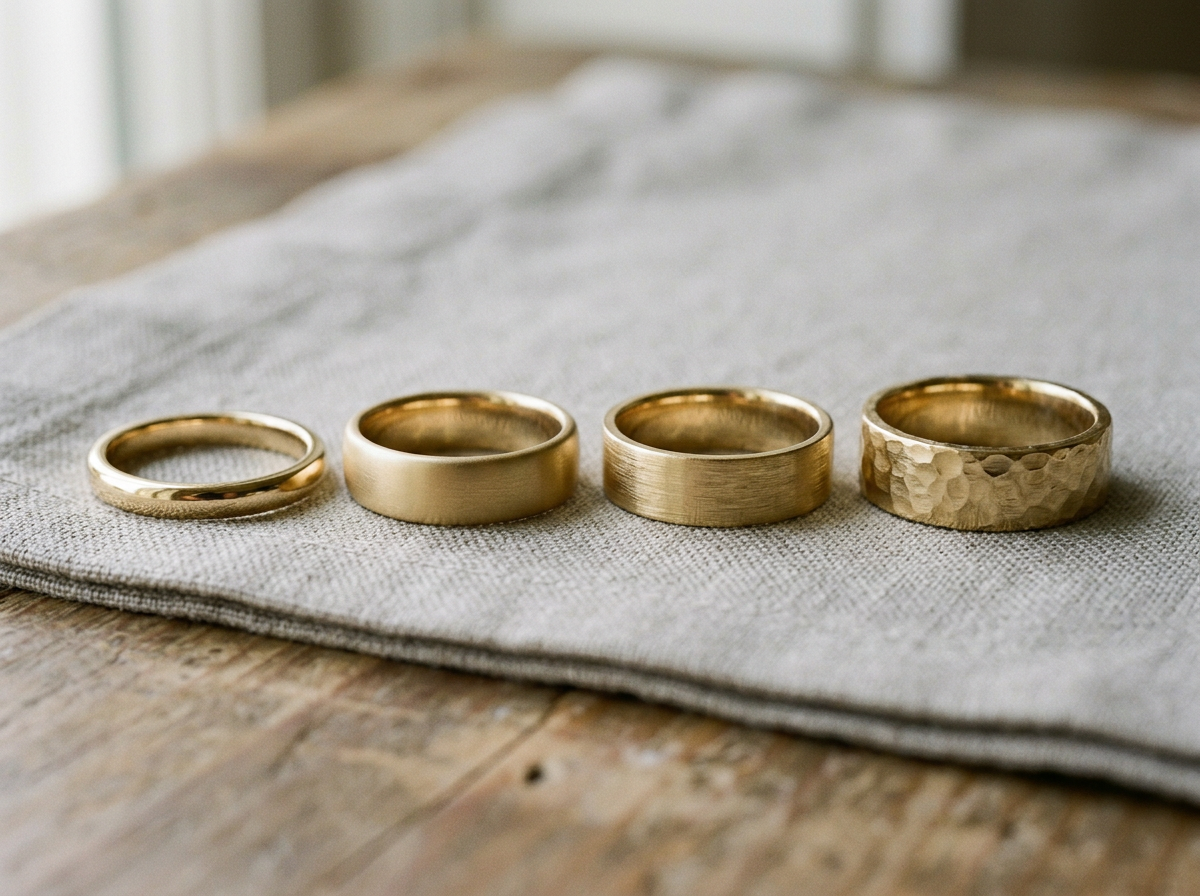
Finishes play a crucial role in the overall look and feel of an 18K yellow gold band. A high polish is a classic choice, offering a bright, reflective surface that enhances the gold's natural luster. However, other finishes have gained significant popularity for men's bands:
- Matte Finish: Provides a subdued, non-reflective appearance, often perceived as more modern and masculine.
- Satin Brush: A soft, brushed texture that offers a subtle sheen, a middle ground between high polish and matte.
- Hammered Texture: Creates a unique, artisanal look with small, intentional indentations, adding character and often helping to disguise minor scratches.
- Sandblasted Exterior: A very fine, granular texture that gives the gold a distinct, almost frosted appearance.
Vintage milgrain detailing, characterized by tiny beaded edges, adds a touch of old-world charm to bands, while contemporary minimalism favors clean lines and unadorned surfaces. The choice of finish can dramatically alter the perception of the 18K yellow gold, making it appear more rugged, refined, or modern depending on the chosen texture.
Incorporating Unique Finishes in Custom Engagement Rings
The finish of a custom engagement ring or wedding band is a powerful design element that can dramatically alter its aesthetic. While the brilliance of polished gold is timeless, incorporating unique finishes allows for a greater degree of personalization and expression, especially for an 18K yellow gold men's wedding band.
The classic high polish finish remains a popular choice, reflecting light beautifully and showcasing the rich, warm hue of 18K yellow gold. It offers a sophisticated and traditional look that never goes out of style. However, for those seeking something different, there's a growing appreciation for alternative finishes.
A matte finish provides a distinct contrast to high polish. It absorbs light rather than reflecting it, resulting in a subdued, non-glossy appearance. This finish can give an 18K yellow gold band a contemporary and understated elegance, often favored by men who prefer a less flashy aesthetic. It also tends to show minor scratches less prominently than a highly polished surface.
The satin brush finish offers a softer, more subtle sheen than a full polish. Created by brushing the metal with fine abrasives, it produces a series of tiny, parallel lines that give the gold a smooth, velvety texture. This finish strikes a perfect balance between the traditional and the modern, providing a refined yet less reflective surface.
For a more rugged or artisanal look, a hammered texture is an excellent choice. This finish involves carefully hammering the surface of the gold to create small, irregular indentations. Each hammered band is unique, bearing the marks of its creation. This texture not only adds visual interest but can also be quite practical, as the varied surface can help to camouflage everyday wear and tear.
A sandblasted exterior creates an even finer, more granular texture than a matte finish. It gives the 18K yellow gold a frosted or powdery appearance, offering a very modern and distinctive look. This finish is particularly effective on wider bands, where its unique texture can be fully appreciated.
When designing a custom 18K yellow gold men's wedding band, the choice of finish allows for a significant degree of individual expression. It's an opportunity to tailor the ring's aesthetic to the wearer's personal style, ensuring the piece is not just a symbol of commitment but also a true reflection of their individuality.
Band Width, Skin Tone Compatibility, and Fit
Beyond the metal and finish, the practical considerations of band width, how the metal complements skin tone, and the ring's fit are crucial for both comfort and aesthetic appeal, particularly for a men's 18K yellow gold wedding band.
Band width is a significant design decision. Men's wedding bands typically range from 4mm to 8mm, though narrower or wider options are available. A 4mm band offers a subtle, understated look, often preferred by those with smaller hands or who desire a less prominent ring. A 6mm band is a popular middle-ground, providing a noticeable presence without being overly bold. An 8mm or wider band makes a strong statement and is often chosen by men with larger hands or those who favor a more substantial piece of jewelry. The ideal width often depends on personal preference, finger proportions, and the wearer's lifestyle.
The compatibility of 18K yellow gold with different skin tones is another important aspect. Yellow gold, with its warm, rich hue, tends to complement individuals with warm undertones in their skin. These individuals often have veins that appear greenish, tan easily, and look best in earthy colors. For them, 18K yellow gold enhances their natural warmth and radiance. However, yellow gold is also incredibly versatile and can look striking on individuals with cooler skin tones, creating a beautiful contrast. Personal preference should always guide this choice, as the right ring is one that the wearer loves and feels comfortable in.
The fit of a wedding band is paramount for daily comfort and security. The most common interior profile for wedding bands is the comfort-fit, characterized by a slightly domed inner surface. This ergonomic design reduces friction and pressure points, making the ring more comfortable to wear, especially for wider bands or for those whose fingers tend to swell slightly throughout the day. A standard interior, which is flat, can sometimes feel tighter or less comfortable over long periods.
Ensuring the correct ring size is vital. Factors like temperature, time of day, and even diet can affect finger size. It's recommended to get sized multiple times under different conditions to find the most accurate fit. For custom rings, jewelers often provide sizers or advise on the best sizing practices to ensure the final piece is perfect.
Here's a list of standard ring profile shapes commonly found in men's wedding bands:
- D-Shape: Flat on the inside, rounded on the outside.
- Court (Comfort-Fit): Rounded on both the inside and outside.
- Flat: Flat on both the inside and outside.
- Half-Round: Flat on the inside, half-round on the outside (similar to D-shape but often more pronounced).
- Concave: Dips inward on the outside, often with flat or comfort-fit interior.
- Beveled: Flat top surface with angled edges.
These considerations ensure that an 18K yellow gold men's wedding band is not just beautiful but also perfectly suited to the wearer's hand and lifestyle.
Frequently Asked Questions About Bespoke Rings
Investing in custom jewelry, especially a bespoke engagement ring or an 18K yellow gold men's wedding band, often comes with a set of common questions. We aim to provide clarity on these aspects to help you make informed decisions throughout your design journey.
What is the typical turnaround time for a bespoke ring project?
The production timeline for a bespoke ring project can vary significantly depending on the complexity of the design, the availability of specific gemstones, and the jeweler's current workload. Generally, from the initial consultation to the final delivery, a custom ring can take anywhere from 4 to 12 weeks.
The process typically begins with design conceptualization and 3D rendering, which might take 1-2 weeks as you review and approve digital models. Stone procurement, especially if you're seeking a rare or specific diamond or gemstone, can add another 1-4 weeks, as sourcing and verification take time. The actual artisan labor, including wax carving, casting, setting, and finishing, usually requires 2-4 weeks. Expedited services might be available for an additional cost, but it's always advisable to plan well in advance, especially for significant events like engagements or weddings.
How does 18K yellow gold compare to platinum in longevity?
Comparing 18K yellow gold to platinum in terms of longevity involves looking at their inherent properties and how they wear over time. Both are excellent choices for wedding bands, but they behave differently.
18K yellow gold, being an alloy, has a certain metal hardness due to its composition of 75% pure gold and 25% other metals. It is durable for everyday wear but will develop a gold patina over time, which manifests as minor scratches and a slight dulling of its original high polish. These scratches are essentially metal displacement, meaning the gold is moved around the surface rather than lost. Periodic polishing can restore its shine, but this also means a tiny amount of metal is removed each time.
Platinum, on the other hand, is significantly denser and generally harder than 18K gold. Its wear characteristic is unique: instead of losing metal when scratched, platinum tends to displace it. This means that platinum develops a rich, satiny patina over time, which many owners cherish. While it may show surface scratches, the metal is not actually lost, contributing to its exceptional longevity and heirloom quality. Platinum is also naturally white, so it never needs re-rhodium plating like white gold. It is also hypoallergenic, making it ideal for sensitive skin.
In terms of daily maintenance, both metals benefit from regular cleaning. Platinum's superior density and displacement wear mean it often retains its weight better over decades of wear, making it a favorite for heirloom pieces. However, 18K yellow gold offers a classic warmth and a slightly more affordable entry point for a high-quality precious metal.
How should custom fine jewelry be cleaned and maintained?
Proper care and maintenance are essential for preserving the beauty and longevity of any custom fine jewelry, especially an 18K yellow gold wedding band. Regular cleaning and occasional professional inspection will ensure your ring remains as stunning as the day you received it.
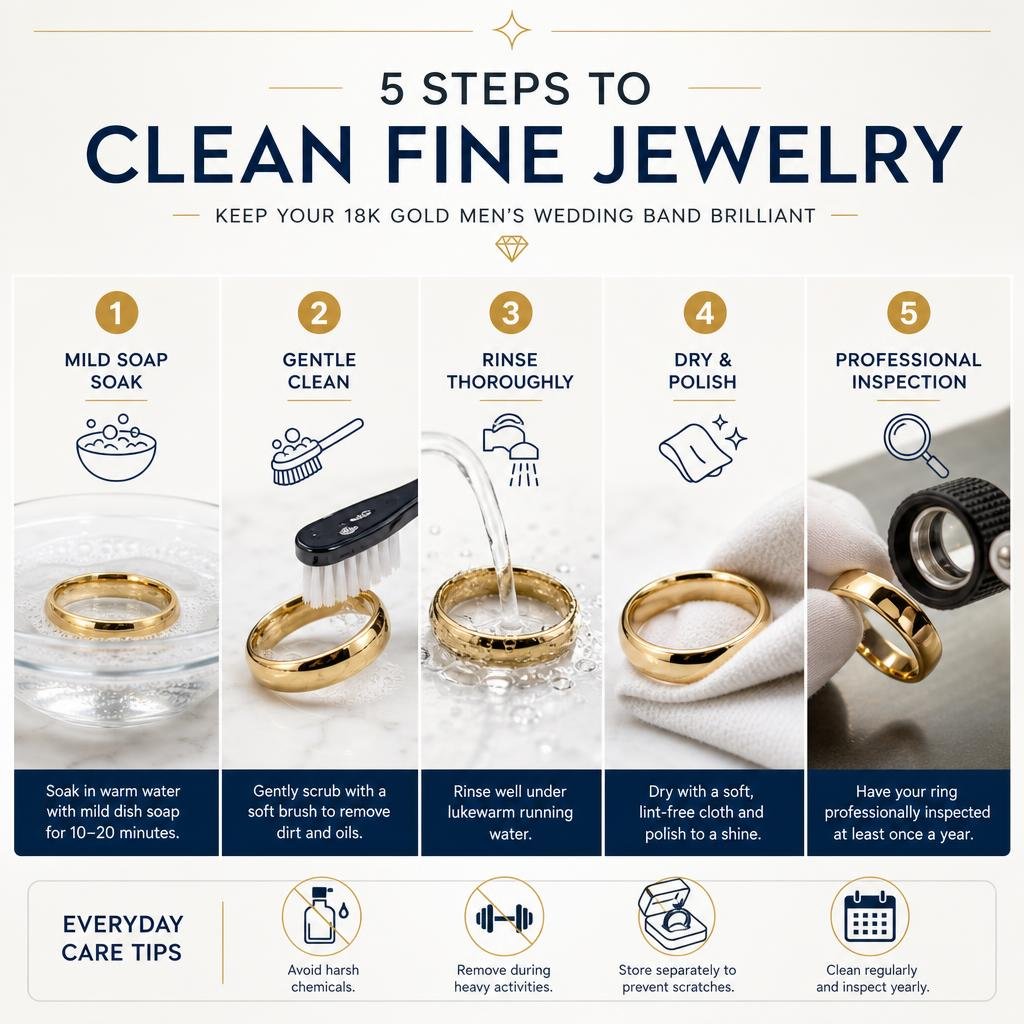
For routine cleaning at home, a simple method involves using mild soap (such as dish soap) and warm water. Soak your ring for 10-20 minutes, then gently scrub it with a soft brush (like a very soft toothbrush) to remove dirt and oils. Rinse thoroughly under running water and dry with a lint-free cloth. Avoid harsh chemicals like bleach or abrasive cleaners, as these can damage the metal or gemstones.
Ultrasonic cleaning can be effective for removing stubborn dirt from intricate designs, but it should be used with caution, especially for rings with certain gemstones (like emeralds or pearls) or delicate settings. Always consult your jeweler before using an ultrasonic cleaner at home.
Beyond cleaning, routine inspection is crucial. We recommend having your ring professionally inspected by a jeweler at least once a year. During this inspection, the jeweler will check for loose stones, worn prongs, or any signs of damage to the band. Prong tightening, if necessary, is a common maintenance task that prevents stones from falling out. Professional polishing can also restore the ring's original luster and remove surface scratches, making your 18K yellow gold band look new again.
It's also advisable to remove your ring during activities that could expose it to harsh chemicals (e.g., cleaning products), extreme impacts (e.g., heavy lifting, sports), or abrasive materials. Store your ring separately from other jewelry to prevent scratches. By following these simple care guidelines, your 18K yellow gold wedding band will continue to be a radiant symbol of your commitment for decades to come.
Conclusion
The journey of designing a custom engagement ring or a men's wedding band is a deeply personal and rewarding experience. From the initial spark of an idea to the final, gleaming piece, every decision reflects a unique story and a profound commitment. We've explored the intricate processes of CAD modeling and hand-forging, the critical choice of precious metals like luxurious 18K yellow gold, and the meticulous craftsmanship that distinguishes handmade jewelry.
Understanding the nuances of metal purity, such as the balance of durability and richness offered by 18K gold, and the importance of ethical sourcing for diamonds and gemstones, empowers you to make choices that align with your values and aesthetic preferences. Whether opting for the classic warmth of yellow gold, the resilient elegance of platinum, or the contemporary appeal of unique finishes, the goal remains the same: to create a piece that is as enduring and unique as the love it symbolizes.
A custom ring is more than an adornment; it is a tangible representation of personal significance and enduring craftsmanship. It carries the weight of memories, the promise of a future, and the artistry of its creation. By embracing the art of bespoke design, you ensure that your ring is not just a piece of jewelry, but a timeless style statement, a cherished heirloom, and a constant reminder of a love story beautifully told.
Comments
