Categories more
- Adventures (199)
- Arts / Collectibles (315)
- Automotive (219)
- Aviation (279)
- Bath, Body & Health (513)
- Children (116)
- Cigars / Spirits (271)
- Cuisine (723)
- Design / Architecture (1118)
- Electronics (222)
- Entertainment (162)
- Event Planning (295)
- Fashion (550)
- Finance (195)
- Gifts / Misc (141)
- Home Decor (558)
- Jewelry (396)
- Pets (91)
- Philanthropy (124)
- Real Estate (386)
- Services (221)
- Sports / Golf (213)
- Vacation / Travel (1036)
- Watches / Pens (223)
- Wines / Vines (861)
- Yachting / Boating (7206)



The Art of Making It Personal: Why Custom Accessories and Handmade Crafts Define Modern Luxury


Published
04/20/2026There’s been a noticeable change in how the wealthy shop. Walk into any high-end boutique today and you’ll notice fewer logo-covered pieces and more conversations about provenance, materials, and the story behind an object. The most coveted things in a luxury consumer’s closet or home aren’t always the most expensive. They’re the most specific.
Mass production built the modern fashion industry, but it also broke something. When the same cap appears on a thousand heads and the same throw pillow appears in a hundred Instagram apartments, ownership stops meaning anything. The affluent consumer noticed this well before the trend reports caught up. The move away from conspicuous branding toward deliberate individuality didn’t happen because people got tired of money. It happened because they got tired of the sameness.
True luxury in 2026 isn’t about the label. It’s about the decision. The hat that was made to your brief, the textile piece you created with your own hands, the objects in your space that couldn’t have come from an algorithm because they required a person to actually want them. That’s where the real status signal lives now.
What It Means to Wear Something Truly Yours
Man standing on a rooftop terrace overlooking a city skyline at sunset, with people socializing and plants around him
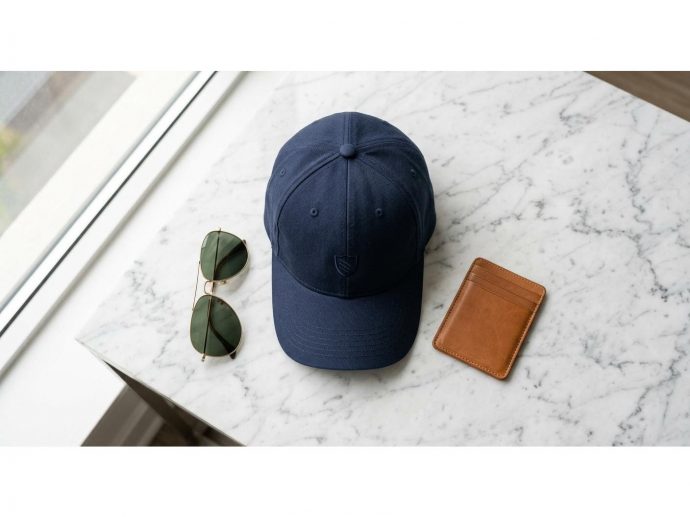
Headwear has always been one of fashion’s most direct identity signals. Historically, hats told you where someone came from, who they pledged allegiance to, and what they did for a living. That tradition hasn’t faded - it’s just become more personal. The cap you wear today says something about your taste, your affiliations, and your design sensibility. Or it says nothing, because it came off a generic shelf.
The market numbers tell a clear story about where demand is heading. According to Future Market Insights (2025), the global headwear market was valued at $20.69 billion in 2024 and is projected to reach $35.92 billion by 2035, growing at a compound annual rate of 5.14%. That growth isn’t being driven by basic beanie sales. It’s driven by consumers who want something that reflects a specific vision. Maximize Market Research’s 2025 headwear report found that more than 35% of consumers will actively pay a premium for custom or monogrammed headwear.
That willingness to pay more for personal fit - aesthetically, not just physically - explains why custom caps have moved from a niche request into a genuine category. When you commission a cap designed around your color palette, your logo, your embroidery specification, you’re not buying headwear. You’re buying a piece that couldn’t exist without your input. That distinction matters to people who care about the most recognizable markers of a high-end lifestyle and understand that those markers have never been purely about price.
What Separates a Premium Custom Cap from a Promotional One
The gap between a truly premium custom cap and a branded giveaway item comes down to three things: the embroidery technique, the material, and the construction. Three-dimensional puff embroidery reads differently from flat embroidery - it catches light, sits proud of the fabric, and looks handcrafted rather than machine-stamped. The crown structure, sweatband, and closure hardware all signal whether a cap was designed to last or designed to be distributed. Premium custom headwear starts with the same quality baseline as the pieces you’d find in a serious accessories boutique, then adds the layer of your specific vision on top.
The Rise of Artisanal Craftsmanship as a Luxury Credential
Luxury brands have been making the case for craft as status for years. Bottega Veneta’s “Craft Is Our Language” campaign didn’t just sell bags - it reframed the relationship between skill and value at a brand level. Loewe has built an entire social media identity around its archive of artisan techniques. These aren’t marketing accidents. They’re responses to what a generation of affluent consumers actually values: knowing how something was made, and knowing that it couldn’t have been made any other way.
The Slow Fashion Global 2025 editorial feature on luxury artisans captures why this matters. The piece profiles the skilled workers behind Milan’s haute couture ateliers and makes the argument that the object’s value is inseparable from the human decision-making that produced it. Every stitch is a choice; every choice is a judgment call that a machine doesn’t make. That philosophy has moved beyond the rarefied world of couture into the broader consumer conversation about what’s worth buying.
The numbers behind this trend are striking. According to CustomCY’s 2025 craft and handmade industry analysis, the global handmade and craft market is estimated at over $906 billion and is projected to reach $1.94 trillion by 2033, growing at 8.83% annually. That’s not a niche hobby market. That’s a fundamental change in how people assign value to objects. The affluent consumer is no longer content to be a passive recipient of someone else’s craftsmanship. They want to understand it, and increasingly, to practice it. If you’re thinking about building a wardrobe that speaks to personal style, the most honest version of that project now extends beyond shopping to making.
Punch Needle: the Craft That Became a Status Hobby
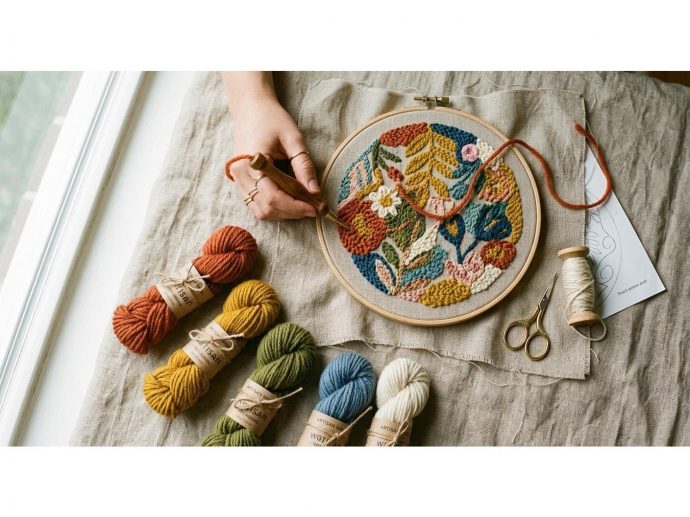
Punch needle embroidery in progress, showing a colorful floral design in a hoop with yarn skeins and crafting tools on linen
Not every status marker comes from a boutique. In 2026, having a creative practice is as much a lifestyle signal as owning the right timepiece - maybe more so, because you can’t delegate it. The practice says you chose to spend your time making something rather than simply acquiring it.
Punch needle is the clearest example of a craft that has crossed from hobbyist circles into genuinely aspirational territory. The technique is deceptively simple: a threaded needle punches loops of yarn or thread through a stretched fabric backing, building up a dense, textured surface. The results can range from graphic and bold to softly impressionistic. What makes punch needle compelling at a luxury level isn’t the technique itself - it’s what you can do with it. Large-scale pieces, worked in fine wool or hand-dyed fiber, produce wall art that no interior designer could catalog-source. Stitchcraft Marketing’s 2025 craft trends report confirms punch needle as one of the year’s top craft categories, with supply sales growing significantly year over year, driven by at-home creative demand.
The home context matters here. According to Printful’s 2025 home decor market report, the U.S. home decor market is valued at $139 billion, and the wall decor segment alone is expected to grow by $12.6 billion between 2024 and 2029 - with personalized and custom pieces leading that demand. A textile piece you made yourself sits at the exact intersection of personal expression and home investment that high-end consumers are actively pursuing.
That’s why a well-chosen set of punch needle kits gives you more than a craft supply haul. It gives you the starting materials for a piece of textile art that is, by definition, one of a kind. The design is yours, the color choices are yours, the scale is yours. No two pieces from the same kit will look alike because the person making them is never the same.
What Makes Punch Needle Output “Luxury-grade”
Material choice is the deciding factor. Wool yarn - especially single-ply wool or hand-dyed merino - produces a surface that reads as sophisticated in a way that acrylic simply doesn’t. The same applies to the backing fabric: monk’s cloth and weaver’s cloth hold their structure and allow fine detail work; cheaper alternatives distort under tension and show their limits in the finished piece. Scale also matters: a small punch needle hoop looks like a hobby project; a large framed piece worked in carefully chosen colors looks like it belongs in a gallery.
Craft as a Luxury Ritual: Why Making Beats Buying
The language around luxury leisure has changed. A generation ago, the aspiration was the object - the watch, the bag, the car. Now the aspiration increasingly includes the experience of making. Wine education, Japanese pottery workshops, professional bread-baking courses - these aren’t fringe interests among affluent consumers. They’re the activities that people who have already acquired most things they want turn to when they want something that acquisition can’t provide.
Custom headwear and handmade textile art share this same underlying value proposition: both exist because someone made a deliberate choice, not because an algorithm suggested a purchase. That’s the actual luxury differentiator in 2025. According to the ASI/Counselor 2025 Product of the Year report, personalized accessories took the top spot, with searches for custom personalized products on the ASI ESP platform up 40% year over year. The appetite isn’t slowing. It’s accelerating.
The broader craft industry data from Grand View Research’s handicrafts market analysis supports the same conclusion at a macro level: handmade goods are growing at rates that outpace mass-produced alternatives across categories. The consumer driving that growth isn’t necessarily shopping at a craft fair. They’re someone who cares about what their objects say, who made them, and whether the making required skill.
This connects directly to how people think about men’s accessories across different style contexts. The cap you pair with a tailored coat at a gallery opening carries a very different kind of weight when it was designed to your specifications rather than pulled from a rack. The distinction isn’t obvious to a casual observer - but it’s obvious to you, and that’s the point. Luxury was always partly about knowing something others don’t.
Conclusion: Personalization is Not a Feature - It is the Point
In a market saturated with identical products, specificity is the scarcest commodity. A custom cap ordered to a precise design brief and a punch needle piece worked over several evenings share something that no mass-produced alternative can match: they couldn’t exist without a specific person deciding they should.
The consumer who prioritizes bespoke and handmade isn’t rejecting luxury. They’re doing something more interesting - they’re redefining it. They’re saying that the value of an object isn’t located entirely in its brand history or its retail price, but in the decisions and skill embedded in its production. Luxury houses have been making this argument for decades. The difference now is that consumers have tools to make it about themselves, not just about the house.
As brands increasingly benchmark quality against artisan standards, and as the handmade market continues its run toward multi-trillion-dollar scale, the consumer who develops both taste and technique will find themselves ahead of a trend that isn’t going away. The most interesting wardrobes and the most interesting homes will belong to people who understood that early.
Comments
