Categories more
- Adventures (114)
- Arts / Collectables (32)
- Automotive (89)
- Aviation (93)
- Bath, Body, & Health (184)
- Children (62)
- Cigars / Spirits (119)
- Cuisine (189)
- Design/Architecture (79)
- Electronics (93)
- Entertainment (55)
- Event Planning (136)
- Fashion (177)
- Finance (19)
- Gifts / Misc (49)
- Home Decor (188)
- Jewelry (134)
- Pets (33)
- Philanthropy (6)
- Real Estate (113)
- Services (69)
- Sports / Golf (56)
- Vacation / Travel (429)
- Watches / Pens (101)
- Wines / Vines (83)
- Yachting / Boating (123)


The Electric Car Equation: When Salary Packaging Starts to Make Sense

Published
08/31/2026Electric cars have moved well beyond the “interesting idea” stage. They’re now part of the everyday car market, with more models, better driving ranges and a charging network that’s gradually becoming easier to live with. Even so, plenty of drivers still hesitate when they look at the upfront price.
That’s where the way you pay for the car becomes just as important as the car itself. For some employees, a novated lease electric car arrangement can change the numbers considerably, particularly when tax treatment, running costs and salary packaging are all considered together.
The catch is that electric vehicles shouldn’t be treated as an automatic financial win. Whether the equation works depends on your salary, driving habits, chosen vehicle, lease structure and what you’d otherwise spend on a petrol or diesel car.
Start With the Cost You’d Actually Pay
Sticker price is only one part of car ownership, but it’s the number most buyers naturally focus on first.
An EV might cost more to buy than a similar-sized petrol vehicle, yet the long-term ownership picture can look quite different once fuel, servicing, registration, insurance and depreciation enter the mix.
Electric cars generally have fewer moving mechanical parts than internal combustion vehicles. There’s no engine oil to replace, no exhaust system and fewer components associated with a traditional engine and gearbox. That doesn’t mean servicing disappears, but the maintenance profile can be different.
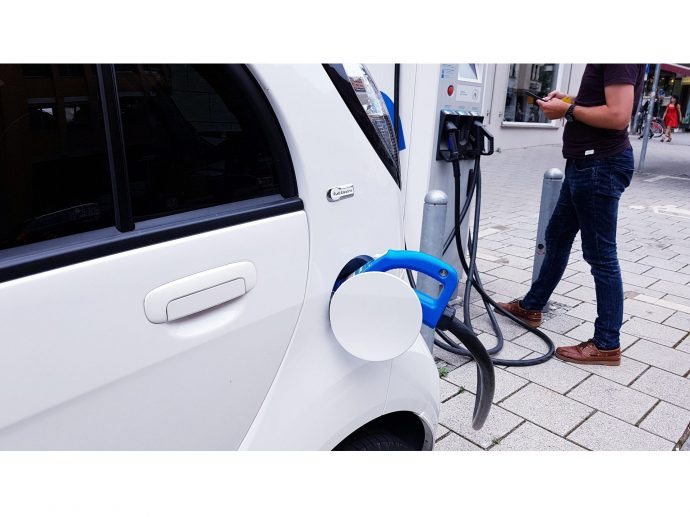
Charging costs also vary enormously depending on where and how you charge. Someone who can plug in at home overnight may have a very different experience from a driver who relies heavily on public fast chargers.
So before deciding whether an EV is “expensive”, it helps to compare complete ownership costs rather than purchase prices alone.
Salary Packaging Changes the Comparison
A novated lease effectively connects the employee, employer and finance provider under one arrangement. Lease and eligible running costs are generally managed through salary deductions, which can make budgeting simpler because expenses are grouped together rather than arriving separately throughout the year.
Electric vehicles have attracted particular attention in this space because eligible EVs can receive favourable fringe benefits tax treatment under current Australian rules, provided specific conditions are met.
That can materially alter the economics.
Instead of comparing a privately purchased petrol vehicle against a privately purchased EV, an employee might need to compare several scenarios: buying outright, using ordinary car finance, leasing a petrol vehicle or packaging an eligible electric vehicle.
Once those alternatives are placed side by side, the cheapest-looking car on the showroom floor isn’t necessarily the cheapest option overall.
Your Driving Pattern Matters More Than You Think
EV ownership tends to suit some lifestyles remarkably well and others less neatly.
If most of your driving consists of commuting, school runs, shopping and relatively predictable weekend trips, charging can become almost invisible. Plug the car in when you get home and it’s ready again the next morning.
Long-distance driving introduces more planning. Australia’s charging infrastructure continues to expand, but charging stops still require more thought than pulling into almost any service station for five minutes.
That doesn’t automatically make an EV inconvenient. For many people, a 20- or 30-minute charging stop every few hours on a road trip is hardly disastrous. But drivers covering very long distances through regional areas may reasonably place greater importance on charger availability and vehicle range.
The best way to judge suitability is to examine what you actually do with your current car, not what you theoretically might do once every few years.
Home Charging Can Be the Quiet Game Changer
One of the biggest differences between petrol and electric ownership is where the “refuel” happens.
Nobody has a petrol bowser in their garage. Plenty of EV owners effectively have the electrical equivalent.
Home charging means the car can recover range while you’re sleeping, working from home or doing absolutely nothing with it. That convenience is easy to underestimate until you’ve experienced it.
However, renters, apartment residents and anyone without off-street parking may face a more complicated picture. Installing charging infrastructure in shared buildings can require approval, electrical upgrades and coordination with owners corporations or building managers.
For those drivers, access to workplace or nearby public charging becomes much more important.
Don’t Choose an EV Just Because It’s an EV
The novelty surrounding electric cars sometimes causes people to approach the purchase backwards. They decide they want an EV first and work out whether the vehicle suits them afterwards.
The ordinary car-buying questions still matter.
Does the boot hold everything you usually carry? Is the rear seat comfortable enough? How expensive is insurance? What happens to the lease if your employment circumstances change? Does the real-world driving range comfortably cover your routine? Is the vehicle pleasant to drive?
A financially attractive arrangement won’t compensate for choosing a car that frustrates you every day.
It’s also worth resisting the temptation to stretch into a significantly more expensive vehicle simply because salary packaging makes the monthly figure look manageable. A lower effective cost is still a cost.
Think in Years, Not Weeks
Electric cars sit at the intersection of several rapidly changing areas: vehicle technology, tax policy, charging infrastructure and the broader shift away from fossil fuels.
That makes the decision slightly different from choosing between two conventional cars.
You’re not only considering what works today. You’re also thinking about how you’ll use the vehicle over the length of a lease or ownership period.
Will home charging become available? Is your daily commute likely to change? Could your annual kilometres increase? How long do you normally keep vehicles?
Nobody can predict every change, but thinking beyond the excitement of collection day tends to produce better choices.
For the right driver, salary packaging can make an electric vehicle surprisingly compelling. For someone else, a conventional car may still make more practical or financial sense.
The useful question isn’t whether electric cars are universally cheaper. It’s whether the complete equation — vehicle price, tax treatment, running costs, charging and everyday usability — works better for you.
Comments
