Categories more
- Adventures (62)
- Arts / Collectables (14)
- Automotive (77)
- Aviation (65)
- Bath, Body, & Health (123)
- Children (6)
- Cigars / Spirits (71)
- Cuisine (66)
- Design/Architecture (22)
- Electronics (63)
- Entertainment (36)
- Event Planning (115)
- Fashion (45)
- Finance (10)
- Gifts / Misc (6)
- Home Decor (118)
- Jewelry (41)
- Pets (3)
- Philanthropy (1)
- Real Estate (16)
- Services (44)
- Sports / Golf (14)
- Vacation / Travel (85)
- Watches / Pens (33)
- Wines / Vines (34)
- Yachting / Boating (67)



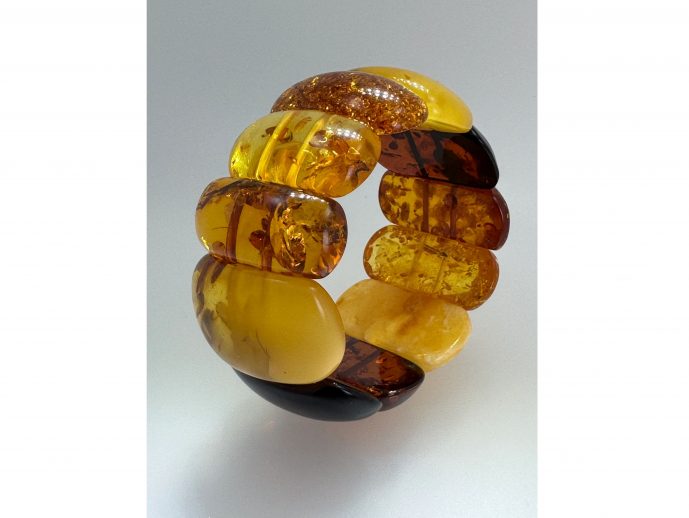
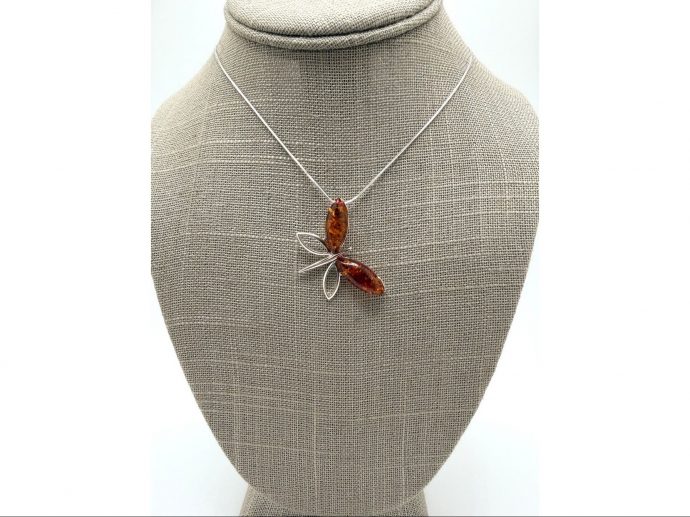
The Timeless Beauty of Handcrafted Baltic Amber Jewelry

Published
08/28/2026What Is Amber? Geological Origins and Historical Significance
Imagine holding a piece of history, millions of years in the making, warmed by ancient sun. That's the essence of amber. Often mistaken for a crystal, this organic gemstone is actually fossilized tree resin, carrying with it the vitality of prehistoric forests. For centuries, people have treasured amber not only for its captivating beauty but also for its purported healing properties and metaphysical benefits.
In this extensive guide, we will delve into the fascinating world of amber. We will explore its geological origins, uncover its historical significance, and illuminate the unique physical, emotional, and spiritual advantages it is believed to offer. We will also provide practical advice on how to identify and care for your genuine Baltic Amber jewelry, along with tips on integrating these precious pieces into your daily life. Join us as we discover why this golden treasure continues to captivate hearts and minds.
Amber, often affectionately referred to as the "gold of the sea," is a remarkable organic gemstone with a rich history that stretches back through geological epochs. Unlike traditional crystals, which are minerals with ordered atomic structures, amber is fossilized tree resin, primarily from the ancient pine species Pinus succinifera and other conifers. This unique origin imbues it with a warm, almost living quality that has captivated humanity for millennia.
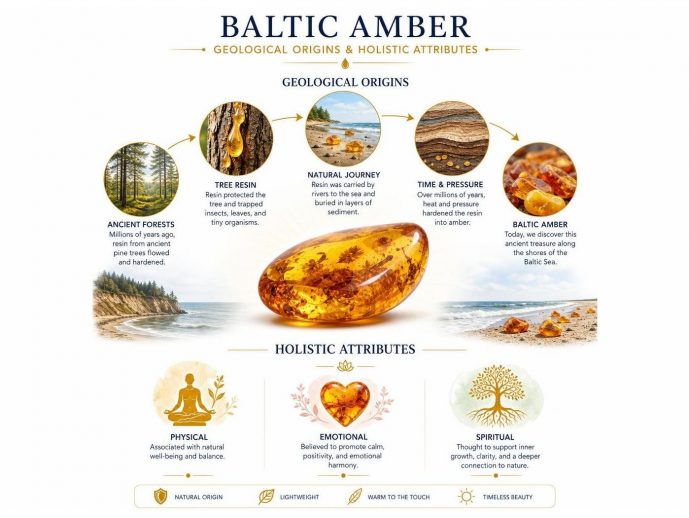
The age of amber deposits varies significantly, with some of the oldest known pieces dating back an astonishing 320 million years, such as a discovery in an Illinois coal mine in 2009. However, the majority of amber prized today, particularly Baltic amber, formed approximately 40 to 120 million years ago. Despite its ancient origins, amber is relatively soft, registering a mere 2 to 2.5 on the Mohs hardness scale. This makes it susceptible to scratches but also allows for intricate carving and polishing.
The vast majority of the world's extractable amber, up to 90%, originates from the Baltic coast region, encompassing areas now part of Russia, Poland, Lithuania, and other neighboring countries. This region has been a hub for amber trade for thousands of years, giving rise to the legendary "Amber Road" trade networks that connected the Baltic to the Mediterranean, Middle East, and Asia. Evidence suggests that amber was utilized by humans as early as the Neolithic era, some 12,000 years ago, for adornment, ritual, and even medicinal purposes. The ancient Greeks, observing amber's ability to attract light objects when rubbed, named it "elektron," a term that eventually gave us the word "electricity."
Geological Formation and Chemical Composition
The journey of tree resin to fossilized amber is a slow and intricate process. It begins when ancient trees, often under stress or injury, exude a sticky, viscous resin as a protective mechanism. This resin, rich in hydrocarbons, would flow down the tree, trapping insects, leaves, and other debris in its embrace. Over millions of years, as these resin deposits were buried under layers of sediment, they underwent a process called polymerization. This chemical transformation, driven by immense pressure and temperature, hardened the organic material, preventing decay and turning it into a stable, inert substance – amber.
Chemically, amber is a hydrocarbon resin composed primarily of carbon, hydrogen, and oxygen (C10H16O). Its molecular structure is amorphous, meaning it lacks the regular, repeating atomic arrangement found in true crystals. This characteristic further distinguishes it as a non-crystalline organic gemstone. One of the most notable components of Baltic amber is succinic acid, which typically accounts for 3 to 8 percent of its composition. This compound has been historically recognized for its potential therapeutic properties, contributing to amber's reputation as a healing stone.
Cultural Lore and Ancient Trade Routes
Amber's allure extends far beyond its scientific properties, deeply embedding itself in human culture and mythology. Ancient Greek myths, such as the tale of Phaeton, explain amber's origin as the tears of the Heliades, Phaeton's sisters, who wept inconsolably after his fiery death. These tears, falling into the Eridanus River, transformed into the golden stones. Similarly, many cultures have referred to amber as "tears of the gods" or "solidified sunlight," attributing divine or celestial origins to its warm glow.
Throughout history, amber has been more than just an ornament; it has served as a powerful talisman and symbol. Roman gladiators were believed to wear amber for protection in combat, while Vikings incorporated it into burial goods, signifying its value even in the afterlife. Perhaps one of the most magnificent testaments to amber's cultural significance is the Prussian Amber Room, a chamber entirely paneled in amber, gifted by King Friedrich I of Prussia to Peter the Great of Russia in the early 18th century. This opulent creation showcased the extraordinary artistry and immense value placed on amber.
The "Amber Road" itself is a testament to the stone's enduring appeal, representing one of the oldest trade routes in Europe. For thousands of years, amber facilitated cultural exchange and economic prosperity, connecting diverse civilizations and spreading its mystique across continents. From Neolithic artifacts to the treasures found in Egyptian tombs and ancient Asian prayer sites, amber has consistently been a material of profound historical and cultural importance.
The Unique Healing and Metaphysical Properties of Handcrafted Baltic Amber Jewelry
Beyond its aesthetic appeal and historical weight, handcrafted Baltic amber jewelry is revered for a spectrum of healing and metaphysical properties. Believed to be a natural energy purifier, amber is thought to draw out negative energies from the body and environment, promoting a sense of well-being and balance. Its organic warmth and ancient origins contribute to its unique energetic signature, making it a favorite among those seeking holistic support.
Many believe amber stimulates the Solar Plexus chakra, the energy center associated with personal power, confidence, and self-esteem. Its golden-orange hues resonate with this chakra, encouraging a sense of vitality and purpose. It is also often linked to the Sacral chakra, which governs creativity, emotional expression, and passion, fostering harmony within these vital energy centers. For those interested in exploring the full range of benefits and finding the perfect piece, we encourage you to discover more about genuine Baltic Amber jewelry and its profound potential.
Succinic Acid and Physical Wellness Benefits of Handcrafted Baltic Amber Jewelry
The physical wellness benefits attributed to amber are often linked to its succinic acid content, particularly in Baltic amber. Succinic acid, a naturally occurring compound, has been historically utilized for its potential pain-relieving and anti-inflammatory properties for hundreds of years. While modern scientific research into amber's direct therapeutic effects is ongoing, traditional practices and anecdotal evidence highlight several key areas where amber is believed to offer support.
It is thought that when amber is worn against the skin, the body's warmth can cause the succinic acid to be absorbed, potentially contributing to its purported effects. This absorption is believed by some to support cellular metabolism, which is fundamental to overall health and vitality. Furthermore, amber is traditionally associated with natural antibiotic properties and the stimulation of tissue repair, making it a popular choice for soothing various bodily discomforts. From teething babies to individuals seeking relief from joint pain, amber has been a go-to remedy in folk medicine.
However, it is crucial to note a safety consideration: individuals diagnosed with thrombocytopenia (a condition characterized by low blood platelet count) should exercise caution. While amber is generally considered safe, some traditional beliefs suggest succinic acid might have effects on blood clotting, and it's always best to consult with a healthcare professional regarding any health concerns or before using amber for therapeutic purposes, especially if you have pre-existing medical conditions.
Chakra Balancing and Emotional Soothing
Amber's energetic properties extend significantly into the realm of emotional and mental well-being. Its warm, comforting vibration is often described as a gentle, nurturing energy that creates a safe space for emotional transformation. Many believe that amber can help re-educate the emotional body, guiding individuals to express their true inner selves and channel their feelings constructively. This can be particularly beneficial for those struggling with emotional blockages or difficulty in self-expression.
A significant benefit attributed to amber is its perceived ability to deflect negative energy from others. Scientific research indicates that negativity can be contagious, and amber is believed to act as a protective shield, allowing individuals to maintain their emotional equilibrium even in challenging environments. This protective quality also makes it a valuable tool for clearing family patterns and generational trauma, helping to release inherited emotional burdens and foster a sense of emotional freedom.
Working with amber is often said to encourage a "good kind" of change and discomfort in one's mental perspective, prompting growth and self-awareness. It can aid in creative vitalization, sparking new ideas and enhancing focus, making it a valuable companion for artists, writers, or anyone seeking to boost their imaginative faculties. Moreover, its soothing presence is thought to alleviate stress, anxiety, and symptoms of depression, promoting calmer moods and a renewed sense of forward momentum. By aligning with the Solar Plexus and Sacral chakras, amber empowers individuals to embrace their personal power and emotional fluidity, fostering overall mental and emotional harmony.
Distinguishing Authentic Pieces and Caring for Handcrafted Baltic Amber Jewelry
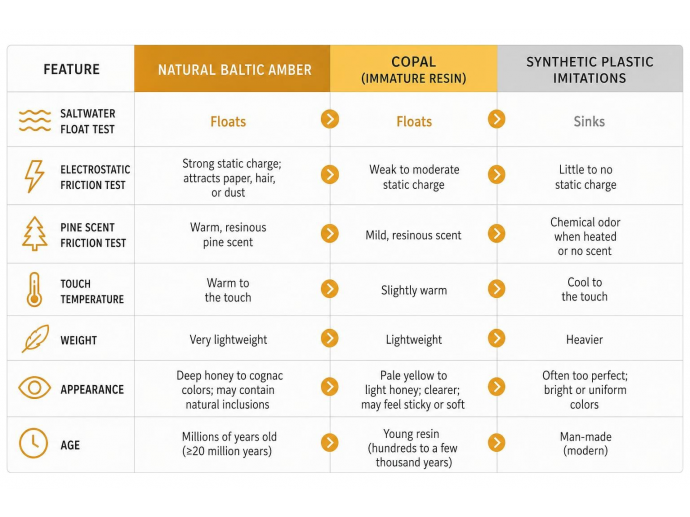
Given amber's popularity and value, the market unfortunately sees its share of imitations, ranging from synthetic plastics to immature resins like copal. Ensuring you possess genuine amber, especially when seeking its purported benefits, is crucial. Furthermore, as an organic gemstone, amber requires specific care to maintain its beauty and integrity for generations. Understanding how to identify authentic pieces and implement a gentle maintenance routine will preserve the unique qualities of your handcrafted Baltic amber jewelry.
Testing Authenticity and Spotting Copal Imitations
Several non-destructive tests can help distinguish real amber from fakes:
- Saturated Saltwater Float Test: This is one of the most reliable methods. Prepare a saturated saltwater solution by dissolving about 7-8 teaspoons of salt in a glass of water. Genuine amber is lightweight and will typically float in this solution, whereas most plastic imitations and glass will sink. Copal, being less dense than plastic, might also float, so further tests are needed.
- Electrostatic Friction Test: As the ancient Greeks discovered, amber generates static electricity when rubbed. Vigorously rub your amber piece on a soft cloth for about 20-60 seconds. If it's genuine, it should become electrically charged and be able to pick up small pieces of paper, hair, or dust. Glass and most plastics will not exhibit this property as strongly, if at all.
- Pine Scent Friction Test: When genuine amber is rubbed vigorously, especially if heated slightly by the friction, it may emit a faint, warm, resinous pine scent. This aroma is a telltale sign of its organic origin. Plastic imitations might smell like chemicals when heated, while glass has no scent.
- Visual and Tactile Cues: Real amber is warm to the touch, while glass is typically cold. Amber is also very lightweight compared to glass. Copal, which is immature resin, often has a lighter yellow hue and can feel stickier or softer than true amber. It's also much younger (a few hundred to a few thousand years old) compared to amber's millions of years.
Proper Maintenance for Handcrafted Baltic Amber Jewelry
Caring for your amber jewelry ensures its longevity and preserves its natural luster. As an organic material, amber is delicate and requires gentle handling.
Here are best practices for its care:
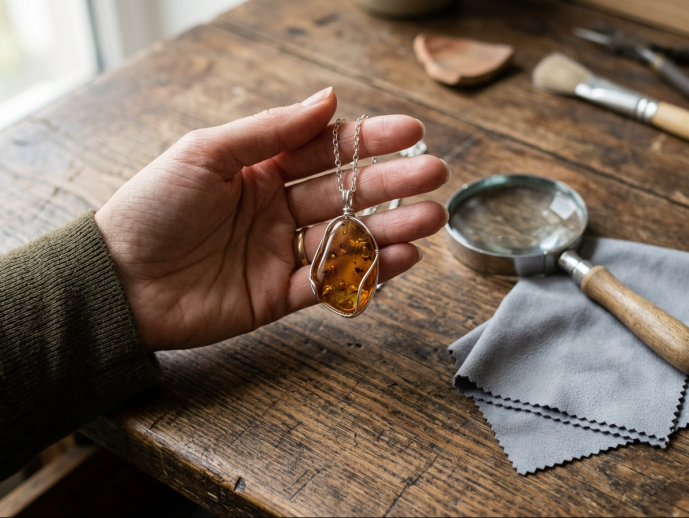
- Cleaning: To clean your amber, simply wipe it gently with a soft, damp cloth. For a deeper clean, you can use warm water with a mild, non-abrasive soap, but avoid prolonged soaking. Rinse thoroughly and dry immediately with a soft cloth.
- Restoring Luster: If your amber appears dull, you can restore its shine by gently polishing it with a tiny amount of olive oil. Apply with a soft cloth, then wipe off any excess to prevent an oily residue.
- What to Avoid: Amber is susceptible to damage from harsh chemicals, solvents, alcohol, perfumes, and acids. Always remove your amber jewelry before applying lotions, hairspray, or cleaning products. Avoid ultrasonic cleaners and steam cleaners, as these can damage the delicate material.
- Heat and Sunlight: Amber is sensitive to extreme temperatures. Prolonged exposure to direct sunlight can cause its color to fade or even crack the stone. Limit direct sunlight exposure to 15-30 minutes for cleansing purposes, if desired, but avoid leaving it in direct sun for extended periods. High heat can also cause amber to become brittle or even burn, as it is a fossilized resin.
- Storage: Store amber jewelry separately from harder gemstones and metals to prevent scratches. A soft pouch or a fabric-lined jewelry box is ideal. Keep it away from extreme temperature fluctuations and excessive humidity.
By following these simple care guidelines, your handcrafted Baltic amber jewelry will retain its timeless beauty and energetic properties for many years to come.
Crystal Pairings and Daily Rituals
Integrating amber into your daily life can be a deeply enriching practice, whether through wearing it as jewelry, using it in meditation, or placing it in your living spaces. Its warm, ancient energy harmonizes well with many other crystals, allowing for synergistic combinations that amplify specific intentions. By thoughtfully pairing amber and incorporating it into rituals, we can enhance its benefits and foster greater well-being.
Energetic Combinations with Complementary Stones
Amber's unique energetic signature makes it a versatile partner for various crystals, each pairing offering distinct benefits:
- Citrine for Manifestation: When paired with citrine, amber's ability to clear mental fog and promote creative vitality is amplified, making it an excellent combination for manifestation and attracting abundance. Citrine's joyful energy complements amber's warmth, fostering optimism and motivation.
- Black Tourmaline for Energetic Grounding: For those seeking protection and grounding, combining amber with black tourmaline creates a powerful energetic shield. Amber deflects negativity, while black tourmaline absorbs and transmutes it, offering robust protection against unwanted energies and promoting a sense of stability.
- Clear Quartz for Property Amplification: Clear quartz is known as the "master healer" and an amplifier of energy. When paired with amber, clear quartz can enhance amber's inherent healing and protective properties, making its energetic influence more potent and far-reaching.
- Rose Quartz for Heart Alignment: To support emotional healing and foster self-love, combine amber with rose quartz. Amber's gentle emotional re-education and soothing qualities blend beautifully with rose quartz's energy of unconditional love, promoting compassion, inner peace, and heart-centered living.
- Moonstone for Intuition and Emotional Balance: Pairing amber with moonstone can support emotional balance and intuition. Amber's connection to ancient wisdom and emotional expression, combined with moonstone's gentle, intuitive energy, can help in navigating emotional tides and enhancing spiritual insight.
Practical Integration into Daily Meditation
Incorporating amber into your meditation practice can deepen your experience and enhance its benefits:
- Grounding Meditation: Hold a polished piece of amber in your hand during meditation. Visualize its warm, golden light spreading throughout your body, grounding you to the earth and connecting you to ancient wisdom. This can be particularly effective for relieving stress and fostering a sense of calm.
- Workspace Focus: Place a piece of amber on your desk or in your workspace. Its energy is believed to clear mental fog, enhance focus, and stimulate creativity, making it an ideal companion for tasks requiring concentration and innovative thinking.
- Solar Plexus Visualization: Lie down and place a piece of amber directly on your solar plexus chakra (just above the navel). Focus on its warmth and visualize a vibrant golden light emanating from this area, strengthening your personal power, confidence, and sense of purpose.
- Daily Protective Wearability: The simplest way to integrate amber is to wear it as jewelry—a necklace, bracelet, or ring. This allows its energetic properties to be in continuous contact with your aura, providing ongoing protection, emotional support, and a steady flow of its ancient, vitalizing energy throughout your day.
- Home Harmony: Place amber in living spaces to purify the energy, create a warm atmosphere, and deflect negativity. A piece in the bedroom can promote restful sleep and emotional healing, while in the living room, it can foster harmonious interactions.
By consciously choosing how and where to use your amber, you can harness its unique properties to support your physical, emotional, and spiritual well-being in meaningful ways.
Frequently Asked Questions
As we explore the profound benefits and rich history of amber, several common questions often arise. Here, we address some of the most frequently asked queries to provide further clarity and insight into this remarkable organic gemstone.
What makes Baltic amber different from standard amber?
Baltic amber, primarily sourced from the Baltic Sea region, stands out due to several distinguishing factors. Firstly, it is significantly older than most other amber varieties, typically dating back approximately 44 million years. This age contributes to its unique chemical composition. Most notably, Baltic amber boasts a relatively high concentration of succinic acid, ranging from 3% to 8%. This compound is widely believed to be responsible for many of the traditional healing properties associated with amber, such as its purported natural antibiotic properties and its role in supporting cellular metabolism. While other types of amber exist worldwide, Baltic amber's specific geological origin and succinic acid content give it a distinct reputation in the realm of holistic wellness.
How do you perform the saltwater float test on amber?
The saltwater float test is a simple and effective method to help verify the authenticity of amber. Here’s how to perform it:
- Prepare a Saturated Salt Solution: Fill a glass or bowl with approximately 7-8 teaspoons of table salt for every cup of warm water. Stir thoroughly until the salt is completely dissolved. It's crucial for the solution to be saturated, meaning no more salt can dissolve.
- Submerge the Amber: Gently place your amber piece into the saltwater solution.
- Observe Buoyancy: Genuine amber is relatively lightweight and has a specific gravity that causes it to float in saturated saltwater. In contrast, most common imitations, such as plastic, glass, or even some types of copal, are denser and will sink to the bottom.
- Rinse: After the test, always rinse your amber thoroughly with fresh water to remove any salt residue, and then pat it dry with a soft cloth.
This test is a good preliminary, non-destructive verification method, though it's always best to combine it with other authenticity tests for conclusive results.
Can handcrafted amber jewelry fade in direct sunlight?
Yes, handcrafted amber jewelry can indeed be affected by direct sunlight, and prolonged exposure can lead to undesirable changes. Amber is an organic material and is sensitive to heat and UV radiation. Direct, intense sunlight for extended periods can cause its color to alter, often leading to a fading of its vibrant golden or orange hues, making it appear paler or more opaque. In some cases, excessive heat from the sun can also cause the amber to become brittle or even develop small cracks.
Therefore, when using amber for cleansing or charging, it is generally recommended to limit its exposure to direct sunlight to brief periods, perhaps 15 to 30 minutes at most. For safe storage techniques, it's best to keep your amber jewelry in a soft pouch or a jewelry box, away from direct sunlight, extreme heat sources, and significant temperature fluctuations. This careful approach ensures that your beautiful amber pieces retain their natural color and structural integrity for years to come.
Conclusion
Amber, this extraordinary fossilized tree resin, offers us a unique bridge to the ancient world, carrying the warmth of prehistoric sunlight and the wisdom of millennia. From its fascinating geological formation and rich succinic acid content to its profound cultural significance and wide array of purported healing benefits, amber stands apart as a truly special organic gemstone. We have explored its capacity to soothe physical discomfort, balance chakras, and provide emotional solace, making it a powerful ally in holistic well-being.
The enduring aesthetic allure of handcrafted Baltic amber jewelry, combined with its deep historical roots and the intricate artistry involved in its creation, makes each piece a treasure. By understanding how to distinguish genuine amber and providing it with the proper care, we ensure that these beautiful pieces continue to share their unique energy. Whether worn as a daily adornment, used in meditation, or placed thoughtfully in our living spaces, amber invites us to integrate its ancient vitality into our modern lives. Its ability to connect us to the earth's deep past while offering tangible benefits in the present ensures that amber's timeless charm and holistic power will continue to captivate and enrich us for generations to come.
Comments
