Categories more
- Adventures (158)
- Arts / Collectables (107)
- Automotive (142)
- Aviation (187)
- Bath, Body, & Health (337)
- Children (69)
- Cigars / Spirits (155)
- Cuisine (439)
- Design/Architecture (173)
- Electronics (133)
- Entertainment (90)
- Event Planning (209)
- Fashion (311)
- Finance (27)
- Gifts / Misc (77)
- Home Decor (336)
- Jewelry (233)
- Pets (41)
- Philanthropy (8)
- Real Estate (202)
- Services (134)
- Sports / Golf (107)
- Vacation / Travel (805)
- Watches / Pens (144)
- Wines / Vines (548)
- Yachting / Boating (196)


Timing the Extraordinary: The Discerning Traveller's Guide to the Mara River Crossing

Published
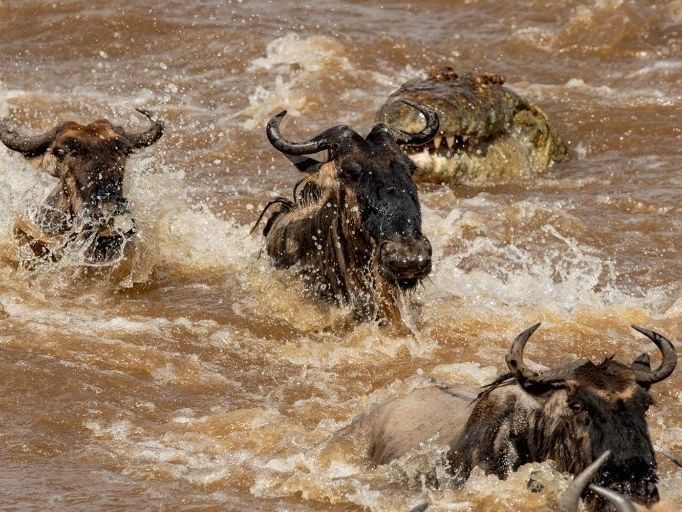
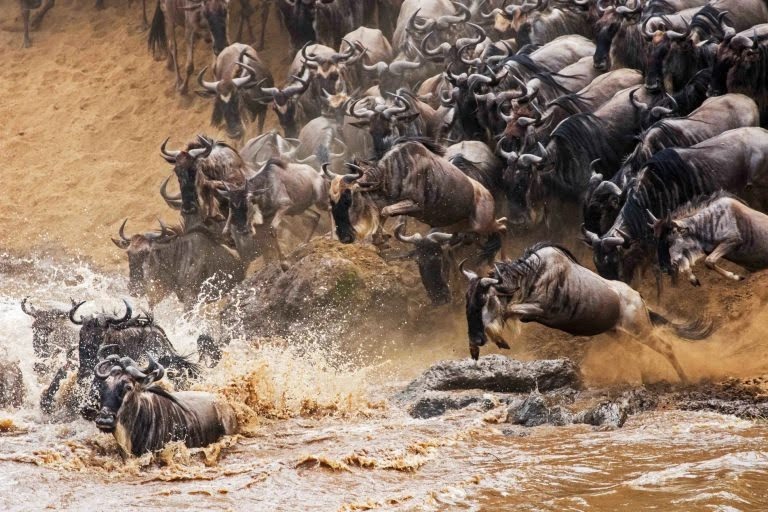
04/27/2026Most travelers who reach out to me about Kenya open with the same line. They've watched the documentaries. They've seen that one photograph, the wildebeest mid-leap, frozen against churning brown water, and they want to know one thing. How do we make sure we actually see it? My name is Joseph. I've spent the last ten years guiding safaris across Kenya as a licensed professional, and I'll be honest with you: the Mara River crossing does not run on a schedule. There are quiet ways to tilt the odds, though, and most of them won't show up on the top travel sites.
What Actually Happens on the Riverbank
When you finally pull up at one of the famous crossing points inside Maasai Mara National Reserve, the first thing you notice isn't the wildebeest. It's the smell. Warm dust mixed with crushed grass, and under that, the faint sweetness of something dead in the water. Vultures sit in the acacia branches above the bank. Hippos grunt below in the muddy current. You hear bleating long before you see a single animal, a low restless sound that climbs as more arrive at the edge.
Then the herd just stops.
They mill. They turn back. They stare at the water for an hour, sometimes longer, sensing what's underneath. Crocodiles in the Mara River can grow past four meters. Some are believed to be older than seventy. They go almost the entire dry season without eating, conserving energy for this exact week, and their bite force is the strongest ever recorded in any animal. So the wildebeest hesitate. And so will you.
The Honest Truth About Timing
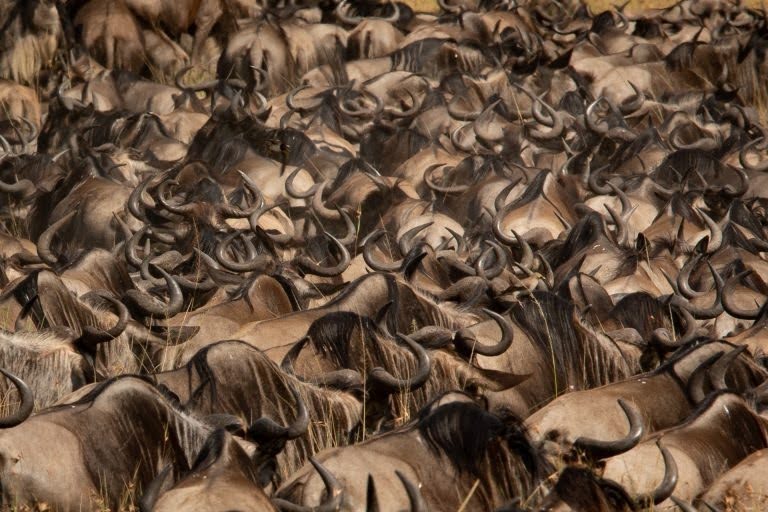
Here's the part the brochures soften. River crossings are the most photographed five minutes in African wildlife, but they sit inside hours, sometimes days, of doing nothing at all. The whole wildebeest migration runs on instinct and rainfall, not on bookings.
In 2022, I had a couple from Geneva fly in for three nights in late August. Perfect window, on paper. They'd booked the most expensive private vehicle, packed long lenses, prepared for everything. We sat at one of the main crossing points from 7 a.m. to nearly 4 p.m. on day one. Roughly 8,000 wildebeest gathered. Zebras came down. Three separate times, a single calf stepped into the shallows, panicked, and bolted back up the bank. The herd never crossed. Not that day. Not the next morning. On day three, half an hour before they had to leave for the airstrip, the river finally broke open about a kilometer downstream. We caught the tail end of it. They left grateful. They had also spent thousands to watch about seven minutes of action.
So when you plan, build in time. Late August through mid-September generally gives you the best odds. The herd follows rain, though, not your itinerary. In 2025, the short rains came late, which pushed the main arrival back nearly three weeks. For 2026, my honest advice is a minimum of four nights in the reserve, not three. Five is better.
If your schedule will only stretch to a long weekend, please go in knowing the trade-off.
Where the Quieter Crossings Happen
Past the obvious points, there's a quieter story almost no one tells.
The Sand River, near the Tanzanian border, sees crossings that get a fraction of the vehicle traffic. Wildebeest pour through there earlier in the season, in a wider, shallower channel that lets them move in a kind of rolling wave instead of the chaotic plunge. Roughly 80% fewer vehicles, in my experience. The drama is smaller, but the photographs feel more intimate. Crossing Point 7 in the main reserve also runs quieter than the more famous Cul-de-Sac and Lookout Hill spots.
There's also a second migration that's barely on the radar. The Loita herds, resident wildebeest from the Loita Plains, push into the Naboisho and Olare Motorogi conservancies in May and June, before the Serengeti animals even arrive. Thousands of animals, almost no other vehicles. It works best in dry years and turns less reliable when the long rains drag on.
A small thing about positioning. Watch how an experienced guide parks. The good ones pull slightly back from the bank, into a tree line where one exists, specifically to cut down windshield glare. A flash of sunlight off glass can spook a herd that's already nervous, and they'll move. Once the wildebeest commit, the vehicle creeps forward. If your driver rolls broadside up to the riverbank in full sun the moment you arrive, you're not with the right crew.
Money, the 12-Hour Trap, and a Bookend in Nairobi
The fee structure changed for 2026, so don't trust older articles. From January through June, non-resident adults pay USD 100 per day for the Maasai Mara. From July through December, which is the prime crossing window, that doubles to USD 200 per day. Children aged 9 to 17 pay USD 50. Kids 8 and under enter free. The Mara is run by Narok County, not Kenya Wildlife Service, so it sits outside the standard KWS portal. The Mara Triangle is cashless only. Card or M-Pesa, no cash at the gate.
Now the trap most first-timers miss. The Mara entry ticket is good for 12 hours, not 24. It expires at 6:00 p.m. no matter what time you walked in. Arrive at Sekenani Gate at 3 p.m. and you've got three hours of validity. If you're staying inside the reserve, you must exit by 10 a.m. on departure day or pay another full day's fee. I've watched guests get charged an extra USD 200 for this, simply because nobody told them.
For Nairobi National Park, which sits seven kilometers from downtown Nairobi and makes a brilliant warm-up the day before you fly to the Mara, KWS now charges USD 80 per non-resident adult and USD 40 per child under the 2026 fee schedule. Pay it online ahead of time at https://kwspay.ecitizen.go.ke/. That's the new portal. The older eCitizen URL was retired. The official KWS site (https://www.kws.go.ke/) carries the up-to-date fee table if anything shifts mid-year.
A disclaimer worth saying out loud: I'm telling you the rates posted at the time I wrote this. Both Narok County and KWS have adjusted prices in the last two years with little public warning, so confirm with your operator before you fly.
A Final Thought
Camps directly on the river, like Governors', Sand River Masai Mara, and Mara Serena, give you the shortest morning drive to the action. Conservancy camps in Mara North, Naboisho, or Olare Motorogi sit a bit farther but offer night drives, walking safaris, and far fewer vehicles at sightings. A common strategy I suggest is to split a five-night stay. Three nights in the reserve during peak crossing dates, then two in a conservancy to recover from the riverbank chaos.
Pack a fleece. Mornings on the open plain can drop near 10°C, and the canvas of a Land Cruiser doesn't keep wind out. Bring binoculars. The action sometimes happens 300 meters away. And give your phone battery a break in the first hour of waiting. I've watched guests fill their entire storage capturing nervous wildebeest shuffling at the edge before the actual crossing began.
If you'd like a custom itinerary built around real river crossing odds rather than a polished marketing version, the team at masaimarasafari.travel can shape one around your dates and travel style. The Mara River crossing rewards the people who plan carefully for it. Plan accordingly.
Comments
